

Products Description
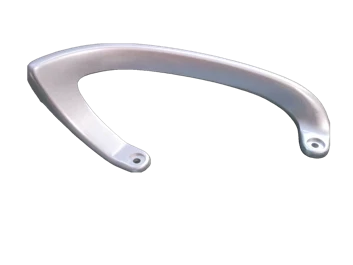
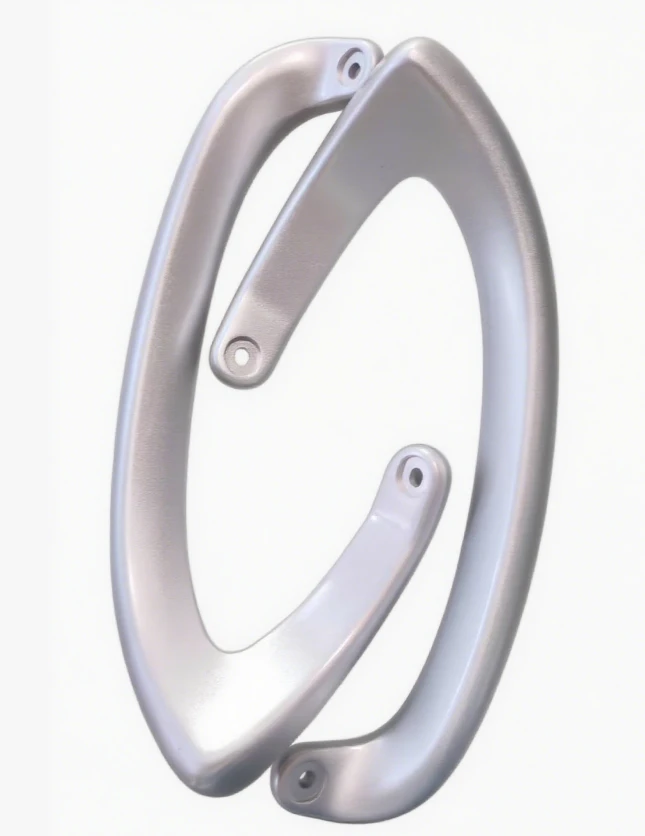
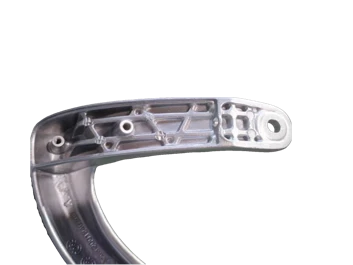
In the overall structure of automotive seats, metal support components play a crucial role. They not only need to bear the pressure from passengers' bodies but also fit precisely with the seat frame and adjustment mechanisms to ensure riding safety and comfort. Among these components, the right rear armrest, a support structure located on the right side of the seat's rear section, is a typical example of high-precision metal die-castings. Such parts usually need to meet the design requirements of being lightweight, high-strength, and complex-shaped, and the die-casting process, with its unique advantages, has become the core technical approach for producing such products.
From the perspective of process characteristics, the die-casting technology is well-suited to the production requirements of automotive seat metal structural components. Firstly, it uses high pressure to inject molten metal (mostly aluminum alloy or zinc alloy) into precision mold cavities quickly, enabling one-time forming of complex geometric structures, including details such as internal reinforcing ribs and mounting holes. This eliminates the need for extensive subsequent machining, significantly improving production efficiency. Secondly, die-cast components have a uniform metallographic structure and stable mechanical properties such as tensile strength and hardness, which allow them to easily withstand repeated stress and impact during daily use. Meanwhile, the aluminum alloy material effectively reduces the overall weight of the seat, contributing to the achievement of automotive lightweight design goals.
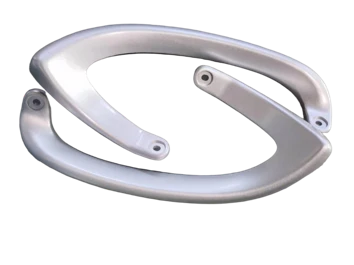
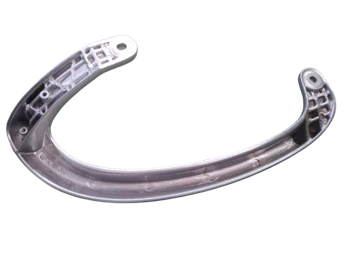
For die-casting suppliers, quality control is the key to gaining market recognition. During the production process, it is necessary to strictly control process parameters such as the temperature of the molten metal, casting pressure, and filling speed to avoid defects like porosity, shrinkage, and cracks. At the same time, a comprehensive inspection system should be established, covering everything from raw material composition analysis, dimensional accuracy testing (using coordinate measuring machines, for example) and mechanical property testing of the formed parts, to visual inspection for surface defects-no link can be neglected. Furthermore, it is essential to maintain close communication with customers to deeply understand the actual application scenarios and performance requirements of the right rear armrest. By optimizing mold design and adjusting process plans, suppliers can continuously improve product quality and reliability, providing solid support for the safety of automotive seats.
Moreover, environmental protection has become a key focus of the automotive supply chain. Die-casting suppliers should optimize production processes to reduce energy consumption and waste emissions-for instance, recycling and reprocessing excess molten metal, or adopting water-based coatings for molds to replace traditional solvent-based ones. These measures not only align with global environmental regulations but also help reduce production costs, creating a win-win situation for both the enterprise and the ecosystem. By continuously integrating technological innovation, environmental protection concepts, and market demands, die-casting suppliers can remain competitive in the ever-changing automotive industry and provide more high-quality, sustainable solutions for automotive seat components.
FAQ
Q: When installing such rear shelf die-castings, what key parts determine their adaptability to the vehicle?
A: The adaptability during installation mainly depends on the size and spacing of the mounting holes on the die-casting, which must match the corresponding mounting points of the vehicle with high precision. Additionally, the overall contour and curvature of the shelf need to fit the spatial structure of the vehicle's trunk or the area behind the seats. For example, some vehicle models have specific requirements for the extension angle of the shelf's side edges to fit the layout around the "right rear armrest", ensuring that after installation, it does not interfere with other functional components inside the vehicle and can bear loads stably.
Q: In the production of such rear shelf die-castings, how to balance the two requirements of strength and lightweight?
A: In terms of materials, high-strength aluminum alloy is often used. It has a low density, enabling lightweight design, while also possessing good tensile and compressive properties to ensure strength. In terms of craftsmanship, optimizing the design of the die-casting mold ensures more uniform filling of the molten metal and forms a reasonable internal metallographic structure. Heat treatment processes can also be adopted to further enhance the material strength. This not only meets the daily load-bearing needs of the rear shelf (such as placing luggage and items) but also contributes to the overall lightweight of the vehicle, working together with other components inside the vehicle to optimize the vehicle's weight.
Q: How does the surface treatment process of rear shelf die-castings affect their performance and appearance?
A: Surface treatment has a significant impact. For instance, the powder coating process can improve corrosion resistance and wear resistance, preventing the shelf from rusting or being scratched during long-term use and extending its service life. Anodizing treatment can form an aesthetically pleasing and protective oxide film, making the surface texture more refined and matching the appearance style of interior components to enhance the overall quality of the vehicle interior. It also improves resistance to humid, oily, and other harsh environments.
Q: As a die-casting supplier, how to customize the production of rear shelves according to the needs of different automakers?
A: Suppliers need to conduct in-depth communication with automakers to understand the vehicle positioning (such as family-use, high-end, new energy vehicles, etc.), interior space planning, and special functional requirements for the rear shelf (such as whether to integrate charging interfaces or dedicated hooks). Based on this information, they adjust the mold design to modify the shelf's shape and mounting hole layout, select different surface treatment processes to match the interior style, and optimize die-casting parameters. This ensures that the rear shelf meets the automaker's requirements in terms of strength, weight, and other indicators, and works in coordination with other components to create a unique in-vehicle experience.
Q: What common damage risks may rear shelf die-castings face in actual use, and how to prevent them?
A: Common damage risks include structural deformation and cracking caused by overloading; loosening of mounting parts and fatigue damage to the shelf due to continuous vibration from rough roads during vehicle travel; and surface corrosion caused by contact with corrosive liquids (such as spilled beverages). For prevention, it is necessary to specify the load capacity limit during product design and inform users of it; optimize the mounting structure and add shock absorption and buffering designs; select high-quality surface treatment processes to improve corrosion resistance. At the same time, users should be advised to use the shelf properly to avoid applying unreasonable loads or allowing corrosion to the rear shelf and its surrounding areas.
Strategic Partners
Hot Tags: right rear armrest, China right rear armrest manufacturers, suppliers, factory