

Products Description
Lorem ipsum dolor sit amet consectetur adipisicing elit.
Function
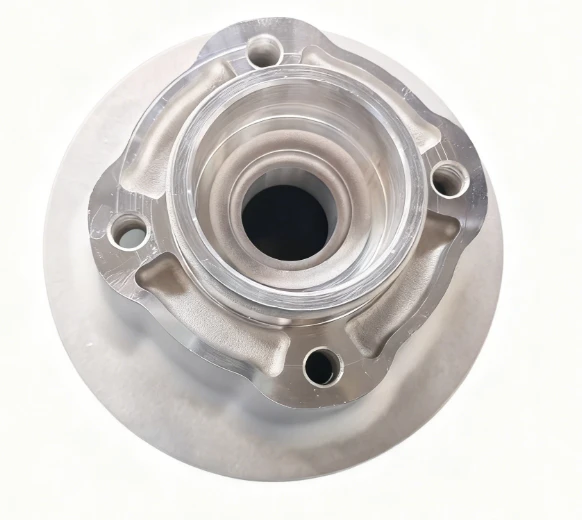
The Chain Pulley Seat is a crucial supporting component in chain drive. Its main function is to provide a stable and precise installation platform for the sprocket. It bears the tremendous tension of the chain and possible axial forces, ensuring the precise positioning (coincidence and parallelism) of the sprocket with the shaft and other components, and guaranteeing smooth transmission. At the same time, it is often designed with a tension adjustment mechanism to facilitate the adjustment of the chain tension, and integrates protective and lubrication structures to extend the service life.
Material and Manufacturing
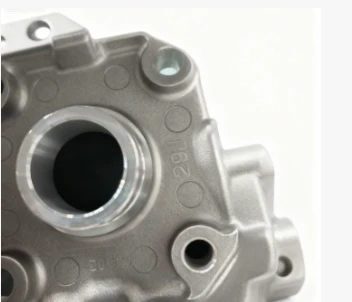
The core processes involve casting (for complex shapes) and precision machining to ensure that high-precision areas such as bearing holes and positioning surfaces meet the standards. The surfaces are often treated with heat treatment (such as quenching) to enhance wear resistance, and are then painted or galvanized for rust prevention.
Application
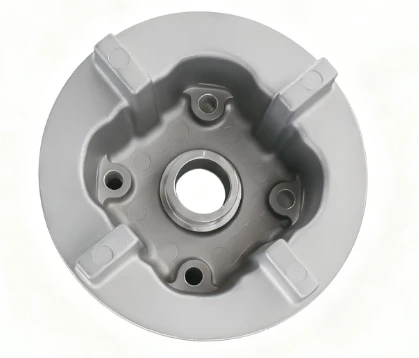
The sprocket housing is widely used in various mechanical equipment that require chain transmission. It is commonly found in mining conveyors, metallurgical equipment (with heavy loads and high temperatures), logistics sorting lines/warehousing equipment (requiring lightweight or precision), agricultural machinery (requiring dust-proof and sealing), and construction machinery (such as track tensioning systems), serving as the fundamental component that ensures the reliable and efficient operation of the chains.
FAQ
Q: What are the differences between the sprocket seat and the sprocket?
A: The sprocket is a gear with teeth, which directly meshes with the chain to transmit power; the sprocket seat is a base that supports and fixes the sprocket, providing an installation platform, bearing the load and ensuring positioning accuracy.
Q: How to select the appropriate sprocket housing?
A: It should be chosen based on four key parameters: Chain specifications (such as 08B, 10A); Transmission shaft diameter (such as Ø25mm, Ø40mm); Load size (radial force/axial force) ; Working environment (temperature, dust, corrosiveness).
Q: Does the sprocket housing need lubrication? How often?
A: Yes! For the sliding bearing type sprocket housing, lubricating grease should be added every 8-12 hours; for the rolling bearing type, it can be extended to once a week. In high-temperature or dusty environments, the frequency should be shortened.
Q: How to ensure the alignment of the sprocket during installation?
A: Follow these steps: ① Use a dial indicator to measure the concentricity of the bearing hole of the sprocket seat and the shaft (deviation ≤ 0.05mm); ② Adjust the installation bolts to make the two sides of the sprockets parallel (misalignment ≤ 1mm/meter). 5. How to adjust the tension of the chain? Answer: For the chainwheel seat with sliding rails: ① Loosen the locking screw; ② Rotate the adjusting screw to move the chainwheel until the chain sag meets the standard (usually 2% of the chain length); ③ Re-lock the screw.
Q: Under what circumstances should the chain wheel housing be replaced?
A: It is recommended to replace it in the following cases: The wear of the bearing hole exceeds the diameter by 0.5%. The main body has cracks or deformations. The regulating mechanism has failed (for example, the slide rail is stuck).
Q: How to choose cast iron and steel chain wheel bases?
A: Cast iron (HT250): Suitable for static light-load and cost-sensitive scenarios; Steel (45#/Q355): Recommended for equipment subjected to impact loads, or for structures that require welding or customization.
Q: What should be done if the bolts for the gear housing are loose?
A: ① Use anti-loosening nuts or thread sealant first; ② The bolts need to be re-tightened 30 minutes after the first run; ③ Regular inspections are recommended (check the bolt torque every shift). 9. Why is a positioning stopper designed for the sprocket housing? Answer: The stopper enables the sprocket to automatically align radially, preventing eccentricity during installation from causing chain skipping, abnormal wear and vibration noise.
Q: Is the abnormal noise in the chain drive related to the chain wheel seat?
A: Possibly! Common causes include: The bearing of the sprocket housing is damaged (accompanied by overheating); The installation of the plane being tilted causes the sprocket to sway. Insufficient tension (chain hitting the guide rail).
Strategic Partners

Hot Tags: chain pulley seat, China chain pulley seat manufacturers, suppliers, factory