

Casting Flange
Ningbo Zhouchi Vehicle Industry Co., Ltd. was founded in 1992, located in Binhai Industrial Park of the beautiful coastal port city -Ningbo. Now our company covers the total area of 16000 square meters, with 150 staffs, including 20 quality inspectors and engineers. Our turnover is around12 Millions USD. Our company specializes in Aluminum Die-casting and Zinc Die-casting, CNC machining and assembling.
Why Choose Us
Experienced Team
Our team of engineers and technicians has years of experience in the industry, and we leverage that expertise to provide our clients with the best possible solutions.
Exceptional Customer Service
We pride ourselves on providing exceptional customer service and technical support to our clients, ensuring that they have a smooth and hassle-free experience.
Quality Products
We use only the highest-grade materials and advanced manufacturing techniques to produce products that are reliable, durable, and perform to the highest standards.
Competitive Price
We have professional sourcing team and cost accounting team, stive to reduce cost and profit and provide you a good price.
Sustainable Development
Establish a good reputation and brand value in the industry, and promote the sustainable, stable, rapid and healthy development of the enterprise.
One Stop Solution
From the begining inquiry and throughout the entire process until you receive the goods. we are dedicated to supporting you every step of the way.
-
![Aluminum Box Cover]() Aluminum Box CoverThis aluminum box cover is made of high-quality metal materials and has excellent performance and advantages. It is an important matching component for various equipment boxes.read more
Aluminum Box CoverThis aluminum box cover is made of high-quality metal materials and has excellent performance and advantages. It is an important matching component for various equipment boxes.read more -
![Casting Motor Flange]() Casting Motor FlangeCasting motor flange is one of the important components connecting pipelines, commonly found at pipeline joints or equipment inlet and outlet. The function of a die casting machine flange is to...read more
Casting Motor FlangeCasting motor flange is one of the important components connecting pipelines, commonly found at pipeline joints or equipment inlet and outlet. The function of a die casting machine flange is to...read more -
![Aluminum Bearing Flange]() Aluminum Bearing FlangeThe bearing capacity of aluminum bearing flange is relatively large, making them suitable for heavy-duty situations; High precision requirement, able to withstand high speed and high torque; Good...read more
Aluminum Bearing FlangeThe bearing capacity of aluminum bearing flange is relatively large, making them suitable for heavy-duty situations; High precision requirement, able to withstand high speed and high torque; Good...read more -
![Aluminum Die Cast Flange]() Aluminum Die Cast FlangeAluminum die cast flange is lightweight, making them easy to install and use; It can generate a layer of oxide film in the air to prevent further corrosion, thereby improving its service life;...read more
Aluminum Die Cast FlangeAluminum die cast flange is lightweight, making them easy to install and use; It can generate a layer of oxide film in the air to prevent further corrosion, thereby improving its service life;...read more -
![Aluminum Flange Plate]() Aluminum Flange PlateAluminum flange plate is a component used to connect pipes, fittings, or equipment. It is easy to use and can withstand large pressures. Especially in industrial pipelines, the use of flange...read more
Aluminum Flange PlateAluminum flange plate is a component used to connect pipes, fittings, or equipment. It is easy to use and can withstand large pressures. Especially in industrial pipelines, the use of flange...read more -
![Aluminum Top Flange]() Aluminum Top FlangeAluminum top flange can tightly connect different devices, pipelines, or components together. It adopts the principle of surface sealing, which can effectively ensure that the connection will not...read more
Aluminum Top FlangeAluminum top flange can tightly connect different devices, pipelines, or components together. It adopts the principle of surface sealing, which can effectively ensure that the connection will not...read more


A Casting Flange is a type of pipe fitting used to connect pipes together, allowing them to be attached securely and creating a secure seal. It consists of a circular rim usually made from ductile iron or other cast materials with bolt-holes for attachment purposes. The flanges are connected to the piping system using bolts, gaskets and relevant fittings, providing added stability.
Advantages of Casting Flange
Strength
Casting Flange are known for their strength and durability. These flanges are designed to withstand high-pressure systems that others may be unable to. They are also used for heavy-duty applications such as mining, oil refineries, and power plants.
Cost-effective
Casting Flange are often more cost-effective than other types of flanges. This is because the manufacturing process is straightforward, and the raw materials can be sourced at a lower cost. They are also readily available in the market, saving you time searching for the right flange for your system.
Wide Range of Sizes
Casting Flange come in a wide range of sizes, making them versatile enough to be used in various piping systems of different sizes. This diversity in size enables a wide range of applications, from small to large-scale systems.
How To Distinguish Between Forged Flange And Cast Flange
Casting Flange
Both cast flanges and forged flanges are common manufacturing methods for flanges. Forged flanges are produced on the basis of cast steel flanges and are much stronger than cast steel flanges. As for whether to use a cast flange or a forged flange, it depends on the strength requirements of the components to be used. According to the flange material: stainless steel flange, carbon steel flange, alloy steel flange by type are: plate flat welding flange, with neck flat welding flange, butt welding flange, blind flange flange cover, loose cover Flange, threaded flange, socket welding flange, etc.
Cast flanges can produce relatively complex shapes with relatively low cost; general integral flanges (such as valves) are cast. The cast flange has a precise shape and size of the blank, a small amount of processing, a poor streamlined internal structure of the cast flange, and a casting defect (crack, sand hole, air hole, inclusion).
Forging Flange
Forgings can withstand higher shear and tensile forces than castings. Forged flanges are generally lower in carbon content than cast flanges, are less likely to rust, have better streamlined forgings, are denser in organization, and have better mechanical properties than casting flanges; the advantages of forged flanges are uniform internal organization, and there are no blowholes, inclusions, etc. in the casting. Harmful defects, improper forging process will also appear large or uneven grain, hardening crack phenomenon, the quality of forging flange is better, generally through the production of die forging, fine crystal structure, high strength, forging caused by the higher than the casting flange, the price It is also more expensive than casting flanges.
Forging process is generally under the material, heating, forming, cooling after forging. According to the size of the forging mass, how many production quantities can choose different forging methods. The commonly used forging methods include free forging and die forging.
1. Free forging is widely used to forge single-piece and small batch production forgings with simple shapes. The free forging allowance is large and the productivity is low, but the versatility is high and the tools are simple. The basic process of free forging is to progressively forge a forging blank through some basic deformation processes. The basic processes of free forging include upsetting, pulling, punching, bending and cutting.
2. Die forging high productivity, simple operation, easy to implement mechanization and automation. Die forgings have high dimensional accuracy, small machining allowances, and more reasonable distribution of fiber structure for forgings, which can further increase the service life of parts. Die forging is called model forging and the heated billet is forged into a forging die fixed on a die forging apparatus. Common forging equipment includes die forging hammers, hot die forging presses, flat forging presses, and friction presses. The basic processes of die forging: blanking, heating, pre-forging, and final forging. Commonly used processes include upsetting, drawing, bending, punching and forming.
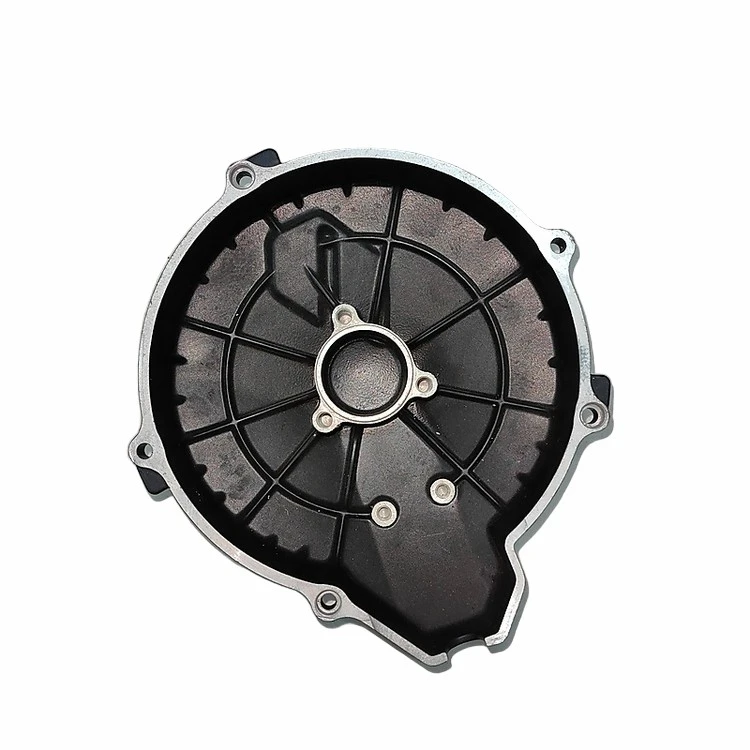
The flange finish - the roughness or smoothness as well as type of serrations—is completed after the flange is cast, forged, or cut. Flange finish requirements vary based on the selected standard and application.
Flange finish options include continuous and concentric serrated, smooth, mill or rolled, and machined finish. We offer modifications to stock items and custom machining so you can get the exact product you need for every application. Protective coatings are applied prior to packaging and shipment.
Flange production techniques, including cast, cut, or forged, can affect the overall performance of the flange. To determine the appropriate technique, consider your intended application and refer to any relevant piping standards.
Common Types Of Flanges And Their Uses
Choosing the right flange for your piping system or intended joining purpose will help to guarantee dependable performance. Below are common flange types and their uses.
Socket-Weld Flanges
Socket-weld flanges have a connection where you insert the pipe into the flange, similar to snap-fit joints. A multi-pass filet weld helps secure the connection. This makes socket-weld flanges ideal for smaller pipe diameters in low-temperature and low-pressure conditions. Therefore, These flanges eliminate the constraints of threaded ends and make this form easier to set up than other welded flanges.
Weld Neck Flanges
Weld neck flanges need to be shaft welded to be installed, just like lap flange joints. However, their reliability makes them a popular option for process pipes. They also perform excellently in systems with several repeat bends, making them ideal for high-temperature and pressure systems.
Slip-On Flanges
Slip-on flanges are widely used and come in various sizes to support systems with increased flow rates and throughout. All you need to do is match the pipe's outer diameter to the flange. The flange must be securely fastened to the pipe on both sides, which makes installation a little more technical.
Threaded Flanges
This design, also called a flange screw, features a thread inside the flange bore that matches the male thread on the pipe or fitting. You may dispense with welding in many applications thanks to the threaded connection. To use threaded flanges, matching the thread to the pipes you want to connect is best.
Long Neck Welding Flanges
Long weld neck flanges, also known as integral flanges, indicate that the neck of a welding neck flange is extremely lengthy. The welding neck flange commonly features a conical neck and a bevel end butted together with the complementary pipe.
Orifice Flanges
When orifice plates or flow nozzles are utilized, orifice flanges are used instead of the typical pipe flanges. This mainly aims to gauge how quickly gases or liquids are moving through the appropriate pipeline.
Comparison of Flange Manufacturing Methods
When choosing flanges, opt for products that have been manufactured to meet the specifications of the intended application. This includes temperature-pressure ratings as well as the chemical composition and final dimensions of the flange. How flanges are made may affect some or all of these requirements, so consider each manufacturing method's advantages and disadvantages.
| Cast | Plate/Cut | Forged | |
| Cost | Better | Best | Good |
| Strength | Better | Good | Best |
| Tolerances | Best | Better | Good |
| Limiting Material Waste | Better | Good | Best |
| Variety of Material & Sizes | Best | Good | Better |
Flange Materials
Common Flange Materials Include:
Carbon Steel
Carbon-steel flanges are alloyed primarily with carbon. Carbon steel has a high hardness and strength that increases with carbon content but lowers ductility and melting point. Carbon steels range from mild and low, with 0.16 - 0.29% carbon to ultra-high carbon steel, with around 1–2% carbon. Steels with carbon content above 2% are considered cast iron.
Alloy Steel
Just as you can enhance properties in plastics with additives, you can alloy steels with other elements to enhance the properties of your chose steel. Common alloys include molybdenum and chromium. Through different elements, you can increase a steel's strength, ductility, corrosion resistance, and machinability.
Stainless Steel
Stainless steel is alloyed with chromium in amounts above 10%. It's chromium that gives stainless steel a higher corrosion resistance than carbon steel, which easily oxidizes from air and moisture exposure. Stainless steel is ideal for corrosive applications that also require high strength. Different grades of stainless steels yield different outcomes. You can learn more in our guide, Understanding stainless-steel grades.
Cast Iron
When iron is alloyed with carbon, silicon, and other alloyants, the result is cast iron. Cast irons have good fluidity, castability, machinability, and wear resistance. They tend to be brittle to a degree with low melting points.
Aluminium
This is a low-density metal with medium strength. Malleable and ductile, it's more corrosion resistant than typical carbon and alloy steels. Aluminium is suitable for flanges that need both strength and low weight, such as for irrigation applications.
PVC
A PVC flange is low cost and durable. PVC pipe flanges also have the advantage of being both chemical and corrosion resistant. Additives can make PVC more flexible and softer. PVC flange connections can provide extra protection to underlying pipes. They're also popular for water-treatment processes, favoured by the agricultural industry and used in domestic plumbing. Lightweight and easy to install, PVC flanges are perfect for PVC pipe systems.

Flange connection allows the two materials to be joined by means of inner and outer lip parts. Decking is placed between them to prevent any problems that may occur. the installers use the flanges to hold the bolts firmly.To ensure tightness when connecting flanges, sealing elements are used. In order to ensure a healthy seal, care should be taken to align the flanges and tighten the bolts with the same torque.
Usually, the flanges are threaded or welded, and you can connect the two flanges with the help of a gasket, which provides easy access to the piping system. These flanges include socket weld flanges, blind flanges, weld-decked flanges and slip-on flanges, etc. there are as many types available.The flanges provide the surface for sealing the gasket against applied forces and moving it around the gasket. The connection will allow easy disassembly and reassembly of pipes or removal of components.
4 Things To Know Before Buying Flanges
Below are some of the facts that you may not know about flanges. These key pieces of equipment can be challenging, but they are necessary for the continuing function of the pipeline industry.
Flanges Can Be Forged Or Cast
There are two different methods for creating flanges. One is casting and the other is forging. Both forged and cast flanges work well, but each production method has advantages and disadvantages.
Cast products are essentially formed when molten metal is poured into a mold or container to form the desired shape. Forged products are produced when steel ingots or billets are subjected to mechanical and thermal pressure to process them into different shapes.
The main problem with cast flanges is that they are prone to internal defects. They should not be used in extremely high pressure situations as they may suddenly fail without warning. Cast flanges are also more likely to be severely affected by corrosion due to the risk of internal defects.
Flanges Come In Many Different Forms
Typically, flange distributors will offer many different types of flanges. There is no single type of flange that is right for every situation. Rather, they need to be selected carefully. If the wrong flange is used in a project, it will fail. Some of the popular types of pipe flanges include blind, weld neck, slip-on, lap joint, threaded, socket, and orifice flanges. Each of these serves a different purpose.
An orifice flange, for example, is meant to house an orifice meter that can track the flow speed within a pipe. This makes it one of the more complex forged parts on the market. On the other hand, a blind flange is considered one of the simplest flange designs. It's little more than a disk used to block the opening of a pipe, with its main difference being that it lacks an opening in the center through which fluid can flow.
Flanges Are Made From Many Different Materials
Lots of materials are used to create this product, including carbon steel and stainless steel, as well as aluminum, cast iron, bronze, and even plastic. At times, different materials may be used to create the same single flange. This is because such products are known as lined flanges, and are essentially built on internal layers of different lining materials. The performance of a product can be affected by the materials used, but the production process is just as important.
Flanges Offer Different Material Grades
It's important to know that the product you're buying is of the correct material grade. Otherwise, it can be far too easy for you to buy a flange that is not suitable for your project. The material grade comes in a combination of numbers and letters and is indicative of the use, mechanical properties, and chemical composition of a product. Study material grades carefully before making a purchase decision.
FAQ
Q: What is the difference between a blind flange and a flange?
Q: What is the manufacturing method for flange?
Q: What does a flange bolt look like?
Q: What is the difference between a flange bolt and a normal bolt?
Q: How do you make a SS flange?
Q: What is the difference between a flange and a slip on flange?
Q: How do flanges fail?
Q: What is the most common material used to construct flanges?
Q: What is the purpose of a flange?
Q: How forged flanges are made?
Q: What is the process of casting a flange?
Q: What is blind flange?
Q: What is the difference between a companion flange and a threaded flange?
Q: What are the basics of flanges?
Q: What is the most common type of flange?
Q: How do you identify a standard flange?
Q: What is the difference between a raised flange and a flat flange?
Q: What are the advantages of flanges?
Q: What is a slip-on flange?
Q: What is a forged flange?
As one of the leading casting flange manufacturers and suppliers in China, we warmly welcome you to buy cheap casting flange from our factory. All customized products are with high quality and competitive price.
Flange, Elliptical LED Street Light Housing, Steering Transfer Box