

Heatsink
Ningbo Zhouchi Vehicle Industry Co., Ltd. was founded in 1992, located in Binhai Industrial Park of the beautiful coastal port city -Ningbo. Now our company covers the total area of 16000 square meters, with 150 staffs, including 20 quality inspectors and engineers. Our turnover is around12 Millions USD. Our company specializes in Aluminum Die-casting and Zinc Die-casting, CNC machining and assembling.
Why Choose Us
Experienced Team
Our team of engineers and technicians has years of experience in the industry, and we leverage that expertise to provide our clients with the best possible solutions.
Exceptional Customer Service
We pride ourselves on providing exceptional customer service and technical support to our clients, ensuring that they have a smooth and hassle-free experience.
Quality Products
We use only the highest-grade materials and advanced manufacturing techniques to produce products that are reliable, durable, and perform to the highest standards.
Competitive Price
We have professional sourcing team and cost accounting team, stive to reduce cost and profit and provide you a good price.
Sustainable Development
Establish a good reputation and brand value in the industry, and promote the sustainable, stable, rapid and healthy development of the enterprise.
One Stop Solution
From the begining inquiry and throughout the entire process until you receive the goods. we are dedicated to supporting you every step of the way.
-
![Heat Dissipation Blower]() Heat Dissipation BlowerA cooling blower is a device that utilizes air flow to achieve heat dissipation, and it is widely used in many fields such as electronic equipment and industrial machinery.read more
Heat Dissipation BlowerA cooling blower is a device that utilizes air flow to achieve heat dissipation, and it is widely used in many fields such as electronic equipment and industrial machinery.read more -
![Oil Cooler Side Cover]() Oil Cooler Side CoverThe oil cooler side cover, a key component of the engine lubrication system made of high-quality aluminum alloy, features a precision structure with functional holes, offers excellent...read more
Oil Cooler Side CoverThe oil cooler side cover, a key component of the engine lubrication system made of high-quality aluminum alloy, features a precision structure with functional holes, offers excellent...read more -
![Aluminum Die Cast Heatsink]() Aluminum Die Cast HeatsinkAluminum die cast heatsink have extremely high thermal conductivity, which can quickly transfer heat to the surface, improve heat dissipation efficiency, and effectively protect machinery and...read more
Aluminum Die Cast HeatsinkAluminum die cast heatsink have extremely high thermal conductivity, which can quickly transfer heat to the surface, improve heat dissipation efficiency, and effectively protect machinery and...read more -
![Top Heatsink]() Top HeatsinkTop heatsink is a type of heat dissipation device, usually installed on the top of the radiator. Because it can effectively reduce the temperature of the radiator, thereby improving the efficiency...read more
Top HeatsinkTop heatsink is a type of heat dissipation device, usually installed on the top of the radiator. Because it can effectively reduce the temperature of the radiator, thereby improving the efficiency...read more -
![Car Lamp Heatsink]() Car Lamp HeatsinkCar lamp heatsink is mainly used for cooling the front headlights of vehicles, to extend the service life of the headlights and improve work efficiency, while also improving the driving safety of...read more
Car Lamp HeatsinkCar lamp heatsink is mainly used for cooling the front headlights of vehicles, to extend the service life of the headlights and improve work efficiency, while also improving the driving safety of...read more -
![Aluminum Round Heatsink]() Aluminum Round HeatsinkThe characteristic of aluminum round heatsink is its circular design, which makes the transfer of heat in the pipeline more uniform. At the same time, it guides air to the gaps between the fins,...read more
Aluminum Round HeatsinkThe characteristic of aluminum round heatsink is its circular design, which makes the transfer of heat in the pipeline more uniform. At the same time, it guides air to the gaps between the fins,...read more -
![Quadrate Heatsink]() Quadrate HeatsinkThe comprehensive heat transfer performance of the quadrate heatsink gradually improves, which not only does not affect heat transfer but also reduces material consumption, reducing resistance...read more
Quadrate HeatsinkThe comprehensive heat transfer performance of the quadrate heatsink gradually improves, which not only does not affect heat transfer but also reduces material consumption, reducing resistance...read more -
![Front Side Heatsink Base]() Front Side Heatsink BaseFront Side Heatsink Base is a cooling device used for cooling, which can accelerate the release of heat generated inside a computer by providing cooling fins, fans, and other cooling devices to...read more
Front Side Heatsink BaseFront Side Heatsink Base is a cooling device used for cooling, which can accelerate the release of heat generated inside a computer by providing cooling fins, fans, and other cooling devices to...read more -
![Heatsink Tool]() Heatsink ToolHeatsink Tool is a device that uses natural or forced convection principles to transfer heat from a heat source to the surrounding environment. Its basic working principle is to add a radiator to...read more
Heatsink ToolHeatsink Tool is a device that uses natural or forced convection principles to transfer heat from a heat source to the surrounding environment. Its basic working principle is to add a radiator to...read more -
![Heat Sink Strip]() Heat Sink StripThe heat dissipation effect of the heat sink strip is good, with strong thermal conductivity, which can quickly transfer heat to the air; High strength and durability, able to withstand large...read more
Heat Sink StripThe heat dissipation effect of the heat sink strip is good, with strong thermal conductivity, which can quickly transfer heat to the air; High strength and durability, able to withstand large...read more -
![Heat Sink Panel]() Heat Sink PanelThe Heat Sink Panel can effectively increase the heat transfer area, allowing heat to be transferred more quickly and evenly to the heat sink, thereby improving heat dissipation efficiency and...read more
Heat Sink PanelThe Heat Sink Panel can effectively increase the heat transfer area, allowing heat to be transferred more quickly and evenly to the heat sink, thereby improving heat dissipation efficiency and...read more -
![Heat Sink Assembly]() Heat Sink AssemblyHeat sink assembly can effectively reduce the operating temperature of electronic devices, thereby extending their lifespan. A constant temperature environment can reduce thermal stress and...read more
Heat Sink AssemblyHeat sink assembly can effectively reduce the operating temperature of electronic devices, thereby extending their lifespan. A constant temperature environment can reduce thermal stress and...read more


A heat sink is a type of heat exchanger used to transfer heat from a heat-producing device or heat source into a surrounding fluid. This fluid is commonly air, but can also be water or some other non-conductive thermal transfer fluid. Heat sinks can be passively cooled via natural convection, or actively cooled by forced convection, using a fan. Heat sinks are commonly made from copper or aluminum.
Advantages of Heatsink
Efficient Heat Dissipation
One of the primary advantages of a heat sink is its ability to efficiently dissipate heat generated by electronic components. Heat sinks are usually made of materials with high thermal conductivity, such as aluminum or copper, which quickly absorb and transfer heat away from the device. This prevents the components from reaching high temperatures that could potentially damage them.
Compact and Lightweight Design
Heat sinks are designed to be compact and lightweight, making them suitable for various electronic devices with limited space. Their small form factor allows for easy integration into devices without adding significant weight or bulkiness. This advantage is particularly important for portable devices such as laptops and smartphones, where space and weight constraints are critical.
Cost-Effective Solution
Heat sinks provide a cost-effective solution for thermal management in electronic devices. Compared to other cooling methods such as liquid cooling or thermoelectric coolers, heat sinks are relatively inexpensive to manufacture and install. This makes them an attractive choice for mass-produced consumer electronics and industrial applications where cost efficiency is crucial.
Versatility and Compatibility
Heat sinks are versatile and compatible with various electronic devices and components. They can be customized and designed to fit specific devices, ensuring efficient heat dissipation in different applications. This versatility allows heat sinks to be used in a wide range of industries, including automotive, aerospace, telecommunications, and more.
What Are The Types Of Heatsink


There are three types of heat sinks: passive, active, and hybrid.
Passive Heatsink
Passive Heatsink rely on natural convection, meaning the ability of hot air to float causes the airflow generated across the heat sink, and they do not require secondary power or control systems to remove heat. But passive heat sinks are not as effective at removing heat from a system as active heat sinks.
Active Heatsink
Active Heatsink utilize forced air--commonly generated by a fan, blower, or even movement of the entire object--to increase fluid flow across the hot area.
This is like the fan in your personal computer turning on after your computer gets warm. The fan forces air across the heat sink, which allows more unheated air to move across the heat sink surface. This increases the total thermal gradient across the heat sink, allowing more heat to exit.
Hybrid Heatsink
Hybrid Heatsink combine characteristics of both passive and active heat sinks. These configurations are less common, often using control systems to cool the system based on temperature requirements.
When the system operates at cooler levels, the forced air source is inactive, only cooling the system passively. Once the source reaches higher temperatures, the active cooling mechanism engages to increase the cooling capacity of the sink.
What Are the Applications of Heat Sinks
Heat sinks are used wherever waste heat has the potential for damaging equipment. Some examples are listed below:
Computer Processors
Computer processors (CPUs) produce a large amount of waste heat during operation. They often employ copper heat sinks with an active cooling fan. Cool CPUs can operate more effectively.
LED Lighting
LED lights don’t produce heat in the same way an incandescent bulb does. the electronics used to make an LED work produce a lot of waste heat that must be transferred away. Small LEDs often use passive heat sinks.
Power Electronics
Power supplies convert AC power to DC power for consumer electronics. This conversion process is inefficient and produces some waste heat that can reduce the life of the power supply unit. Heat sinks on power electronics sometimes employ hybrid cooling and make use of aluminum heat sinks to reduce cost.
Automotive Industry
Apart from the heat sinks used on the control circuitry of vehicles, heat sinks are also used to keep electric motors cool during operation as well as to cool onboard chargers for electric vehicles.
Aerospace Industry
Heat sinks can be found on control circuitry used in aerospace applications. They are also used on spacecraft to transfer heat to the vacuum of space. these heat sinks transfer heat purely through radiation as there is no heat transfer fluid in space.
Consumer Electronics
Consumer electronics make extensive use of heat sinks to keep devices cool and operating efficiently. Typical examples include the heat sinks in computers and cell phones.
What Are The Key Components Of a Heat Sink
A heat sink is a relatively simple device. Listed below are the five components that make up a typical heat sink:
Base
A heat sink base is typically a flat block or sheet of material with excellent thermal conductivity. The base typically has a consistent cross-sectional thickness, but it can also be designed to have a cross-sectional profile that optimizes heat transfer for the specific geometry of the heat source. The base is typically mounted to the heat source with mounting hardware and thermal paste.
Fins
Fins protruding from the heat sink base are responsible for the transfer of heat to the surrounding fluid. These fins are designed to optimize the surface area that the heat sink presents to the fluid. The larger the surface area, the faster the heat transfer rate.
The fins can either form an integral part of the base or can be attached separately using various techniques, for example, via a compression process. The shape and arrangement of the fins can dramatically improve the heat transfer rate.
Heat Pipes
A heat pipe is designed to transfer heat along its axis. Heat pipes can be incorporated inside standard heat sinks and heat spreaders through press fitting, soldering, and thermally conductive epoxy to improve their heat transfer efficiency. They work by transferring heat via a phase change mechanism that causes fluid to vaporize at the heat source, then travel along the axis of the heat pipe to the point where it cools down and changes back into a liquid via condensation.
Thermal Interface Material
Thermal interface materials, or thermal pastes, are used to significantly improve heat transfer between the heat source and the base of the heat sink by filling any air voids between the heat source and the heat sink. Air is a poor conductor of heat, so filling air gaps with a more thermally conductive material enhances the cooling efficiency of a heat sink. Thermal pastes can be metal, ceramic, or silicone-based, with metal-based thermal paste being the most effective.
Mounting Hardware
Heat sinks can be securely fixed to their target heat sources using a number of different mounting methods. For smaller heat sinks, an adhesive with high thermal conductivity is used to directly stick the heat sink onto a heat source. This method is typically used on smaller PCB components. For larger heat sinks, normal screws can be used, or alternatively, spring-loaded push pins are used to optimize the contact pressure between the heat source and the heat sink.
How Does a Heat Sink Work
A heat sink works by moving heat away from a critical component. Nearly all heat sinks accomplish this task in four basic steps:
The source generates heat. This source may be any system that creates heat and requires the removal of said heat to function correctly, such as:
•Mechanical
•Electrical
•Chemical
•Nuclear
•Solar
•Friction
Heat transfers away from the source. Heat pipes can also aid in this process, but we'll cover those components separately. In direct heat sink-contact applications, heat moves into the heat sink and away from the source via natural conduction. The heat sink material's thermal conductivity directly impacts this process. That's why high thermal conductivity materials such as copper and aluminum are most common in the construction of heat sinks.
Heat distributes throughout the heat sink. Heat will naturally travel through the heat sink via natural conduction moving across the thermal gradient from a high temperature to a low-temperature environment. This ultimately means that the heat sink's thermal profile will not be consistent. heat sinks will often be hotter towards the source and cooler towards the sink's extremities.
Heat moves away from the heat sink. This process relies on the heat sink's temperature gradient and its working fluid - most commonly air or a non-electrically-conductive liquid. The working fluid passes across the surface of the warm heat sink and utilizes thermal diffusion and convection to remove heat away from the surface and into the ambient environment. This stage relies on, yet again, a temperature gradient to remove heat from the heat sink.If the ambient temperature is not cooler than the heat sink, no convection and subsequent heat removal will occur. This step is also where the total surface area of the heat sink becomes most advantageous. A large surface area provides an increased area for thermal diffusion and convection to occur.
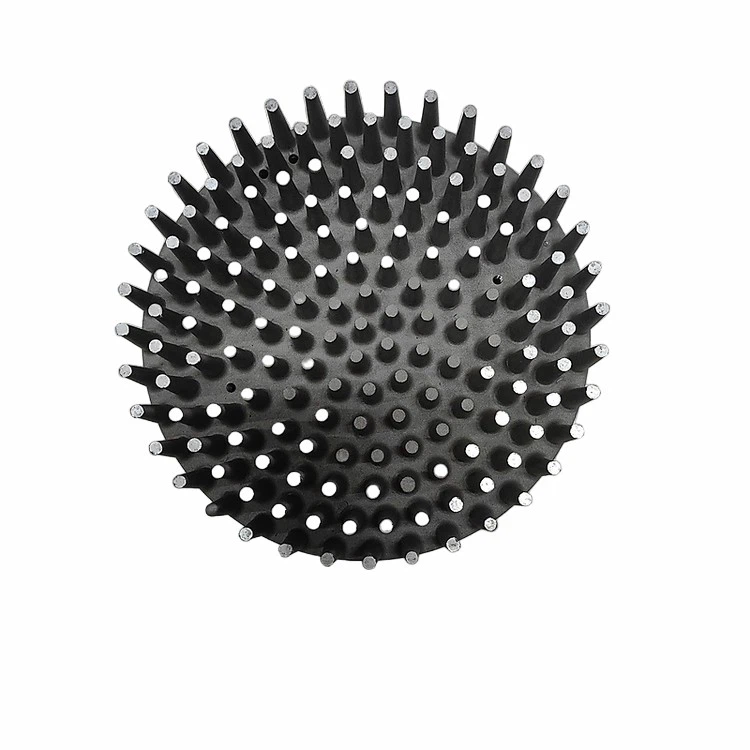
A heat sink is a passive heat exchanger, and it is designed to have large surface area in contact with the surrounding (cooling) medium like air. The components or electronic parts or devices which are insufficient to moderate their temperature, require heat sinks for cooling. Heat generated by every element or component of electronic circuit must be dissipated for improving its reliability and preventing the premature failure of the component.
It maintains thermal stability in limits for every electrical and electronic component of any circuit or electronics parts of any system. The performance of the heat sink depends on the factors like the choice of a material, protrusion design, surface treatment and air velocity.
The central processing units and graphic processors of a computer are also cooled by using the heat sinks. Heat sinks are also called as Heat spreaders, which are frequently used as covers on a computer’s memory to dissipate its heat.
If heat sinks are not provided for electronic circuits,then there will be a chance of failure of components such as transistors, voltage regulators, ICS, LED and power transistors. Even while soldering an electronic circuit, it is recommended to use heat sink to avoid over heating of the elements.
Heat sinks not only provide heat dissipation, but also used for thermal energy management done by dissipating heat when heat is more. In case of low temperatures, heat sinks are intended to provide heat by releasing thermal energy for proper operation of the circuit.
Plate Heat Exchangers
A plate heat exchanger uses metal plates to transfer heat between two fluids, which offers a highly efficient mechanism for heat transfer. It usually has a specialized design well suited to transferring heat between medium- and low-pressure fluids. The plates used in a plate and frame heat exchanger are obtained by the one-piece pressing of metal plates. Stainless steel is a commonly used metal for the plates because of its ability to withstand high temperatures, strength, and corrosion resistance. Their applications include water heaters, cooling tower isolation, waste heat recovery, and thermal storage systems.
The plate heat exchanger’s mechanism differs from a heat sink, because a heat sink basically aims to absorb heat from a heat source while releasing it into the air through fins or pins. As for the advantages, plate heat exchangers can be installed in various places and locations because of their flexibility and compact design. Lower costs in operating and maintenance including their eco-friendliness also make plate heat exchangers attractive. On the other hand, the entire plate heat exchanger unit tends to be larger. Therefore, plate heat exchangers are not the best solution for cooling small portable electronic devices.

How Do You Make a Heat Sink
That depends on several factors, such as the size and material of your heat sink, and the kind of manufacturer making it. Manufacturing heat sinks can actually involve a range of production technologies, including casting and CNC milling.
Extrusion
Extrusion, the process of forcing hot metal billets through a steel die, is the most common way of making aluminum heat sinks. It is a fast, effective, and economic method for making heat sinks out of ductile materials like aluminum 1050. Extruded aluminum heat sinks are typically anodized before use.
Skiving
Skiving or scarfing, the process of cutting material into slices, is a common manufacturing process for the production of plate fin and flared fin heat sinks. The process allows for thinner and more closely packed fins than extrusion, and also provides a level or surface roughness, which slightly increases the total surface area.
Casting
Casting, the process of pouring molten metal into a mold, is another way to make heat sinks — aluminum or copper. Pressure die cast heat sinks can have a high level of complexity and offer excellent mechanical properties. Die casting is also sometimes used to make zinc heat sinks.
Milling
Milling, the subtractive process of cutting material from a blank workpiece, is an affordable way to make heat sinks with virtually any geometrical shape, from materials like aluminum alloys. Milled heat sinks (or machined heat sinks) may be more expensive than alternatives, especially in large quantities, but they can also be made very quickly. Learn more about aluminum machining.
3D printing
Recent advancements in copper additive manufacturing have made 3D printed heat sinks a viable alternative to their traditional counterparts. Powder bed fusion and directed energy deposition technologies have been most successfully used for this purpose.
FAQ
Q: How effective are heat sinks?
Q: Is a heatsink a cooler?
Q: What is the difference between a fan and a heatsink?
Q: How are heat sinks installed?
Q: What goes between CPU and heatsink?
Q: What are heat sinks made up of?
Q: What is a heat sink?
Q: Why is a heat sink important in electronic devices?
Q: How does a heat sink work?
Q: How do I install a heat sink on a central processing unit (CPU)?
Q: What are some factors to consider when choosing a heat sink?
Q: What do you clean a heatsink with?
Q: What is the difference between a heatsink and a CPU fan?
Q: What are the different types of heat sinks?
in one-stop service
Ningbo Zhouchi Vehicle Industry Co., Ltd. was founded in 1992, located in Binhai Industrial Park of the beautiful coastal port city -Ningbo. Now our company covers the total area of 16000 square meters, with 150 staffs, including 20 quality inspectors and engineers. Our turnover is around12 Millions USD. Our company specializes in Aluminum Die-casting and Zinc Die-casting, CNC machining and assembling.

our certifications
ISO 14001:2015
The ISO 14001:2015 certificate is an internationally recognized document that indicates that an organization has established, implemented, maintained, and continuously improved an environmental management system (EMS) that complies with the requirements of ISO 14001:2015.
This certificate certifies that the environmental management system of this organization has met international standards, enabling it to systematically manage its environmental responsibilities and commit to sustainable development.

IATF16949:2016
IATF 16949:2016 is an international standard for quality management systems in the automotive industry. It was developed by the International Automotive Task Force (IATF) and was released in October 2016, replacing the previous version of ISO/TS 16949:2009.
The core objective of IATF 16949 is to continuously improve, prevent defects, reduce variations and waste in the automotive supply chain. It aims to ensure that the design and manufacturing of automotive products (including components and materials) can always meet customer requirements and even exceed customer expectations.

Companies We Have as Clients
We are looking for a cooperative partner to expand our business.





As one of the leading heatsink manufacturers and suppliers in China, we warmly welcome you to buy cheap heatsink from our factory. All customized products are with high quality and competitive price.
Lower Flange, Left Steering Handle Lever, Aluminum Round Heatsink