

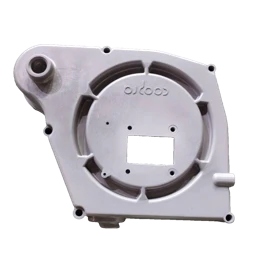
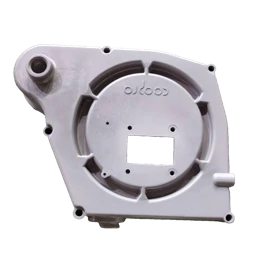
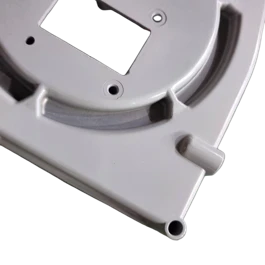
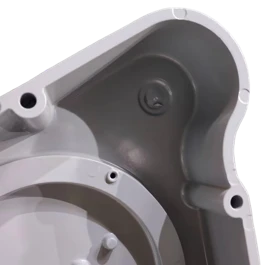
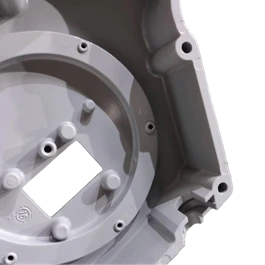
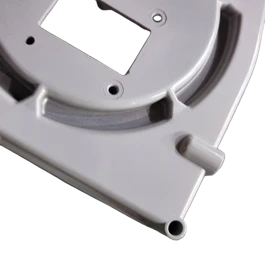
Take the cooling blower shown in the figure as an example. Heat Dissipation Blower shell and other components are usually made of high-quality metal or engineering plastic materials, which have good durability and wear resistance and can adapt to different working environments. It generates strong air flow through the high-speed rotation of the internal impeller, quickly taking away the heat generated when the equipment is running and ensuring that the equipment works stably within a suitable temperature range.
In the field of electronic equipment, such as computer hosts and servers, cooling blowers can effectively dissipate the heat of heating components such as CPUs and graphics cards, preventing performance degradation and even hardware damage caused by excessive temperature. In industrial scenarios, some large machinery generates a lot of heat when running, and cooling blowers can provide cooling for its key components, extend the service life of the equipment and improve production efficiency. Different models of cooling blowers differ in parameters such as air volume, air pressure, and noise, and can be selected according to actual heat dissipation needs.
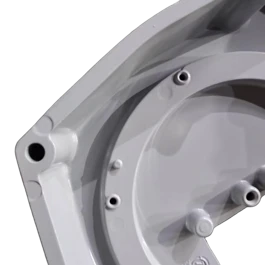
There are several common types of Heat Dissipation Blower
Axial Fan
Working principle: The blades rotate around the central axis, pushing the air to flow in the same direction as the axis. Most of the airflow moves along the axial direction. When the inlet airflow is free air with 0 static pressure, the power consumption is the lowest, and the power consumption increases as the airflow back pressure rises during operation.
Features: Compact structure and convenient installation, which can save space; It has a high flow rate (large air volume) and can exchange air in a large area for rapid heat dissipation; However, the wind pressure is low, it cannot adapt to high-resistance systems, and has poor adaptability to complex air ducts.
Application scenarios: It is often installed on the cabinets of electrical equipment and can also be integrated into motors. It is widely used in electronic equipment and scenarios with high flow rate requirements and low air duct resistance, such as communication cabinets, servers, computer hosts, and factory ventilation.
Centrifugal Fan
Working principle: The airflow is sucked in from the center of the impeller and changes direction after being thrown out by the blades. Usually, the intake air is along the axial direction, while the exhaust air is perpendicular to the axial direction, and the centrifugal force is used to push the airflow.
Features: Limited flow rate (moderate air volume), can generate high wind pressure, and can overcome large air duct resistance; However, the volume is relatively large, the installation space requirement is high, and the noise and energy consumption are higher than those of axial fans.
Application scenarios: Suitable for occasions where the airflow needs to be discharged by rotating 90 degrees or where high wind pressure is required, such as air conditioning systems, factory ventilation, boiler ventilation systems, industrial dust removal, and communication rooms.
Mixed-flow Fan
Working principle: Also known as diagonal flow fan, it combines the design concepts of axial fan and centrifugal fan. The air enters from the fan inlet along the axial direction, and the exhaust direction is the diagonal direction along the axis and perpendicular to the axis. The blades and outer cover are often conical.
Features: Under the same size and other comparable performances, compared with axial fans, it can generate higher wind pressure, and the noise is lower, with both high flow rate and relatively high wind pressure.
Application scenarios: It is often used in industrial cooling systems, HVAC (Heating, Ventilation and Air Conditioning) equipment and other environments that require high wind pressure, as well as some low-noise environments that have requirements for noise.
Cross-flow Fan
Working principle: It uses a long cylindrical fan impeller to work. Both the intake and exhaust air are perpendicular to the axis, which can generate a large area of air flow.
Features: It can cover a large range of heat dissipation area, but the flow rate is low and the wind pressure is low; Due to the adoption of a large-diameter impeller and low operating speed, the noise is low during operation.
Application scenarios: Suitable for occasions that require cooling the large surface of equipment, such as elevators, air conditioners, household appliances, and automobile cooling systems, where strict noise requirements and large-area heat dissipation are needed.
Roots Blower
Working principle: It belongs to positive displacement blower. Through a pair of intermeshing impellers, the volume of the working chamber is changed periodically during rotation, so as to achieve gas delivery and pressurization.
Features: It has high exhaust pressure and flow rate, high efficiency, low noise and long service life, but the price is relatively high.
Application scenarios: It can meet the heat dissipation requirements of large equipment with high heat and high requirements for wind pressure and air volume. However, it is rarely used in the heat dissipation of general common electronic equipment.
Frequency Conversion Fan
Working principle: The rotation speed of the fan is adjusted by changing the power frequency, so as to realize the adjustment of air volume.
Features: It has the advantages of energy saving, low noise and flexible adjustment, and can accurately provide corresponding air volume according to the real-time heat dissipation requirements of the equipment.
Application scenarios: For equipment that needs long-term continuous and stable operation, and the heat dissipation demand fluctuates little and is relatively stable, the frequency conversion fan is an ideal choice.
Our company specializes in Aluminum Die-casting and Zinc Die-casting, CNC machining and assembling. We supply to global market for Automotive and industry application. There are 13 sets die casting machines from 88 to 1600 Ton, 30 sets CNC and machining center, two metal spraying production lines, also equipped with various kinds of detecting equipment like CMM, spectrum analyzer, hardness testing device, Salt spray test machine, etc..
We have passed IATF16949:2016 from 2016, strictly follow the IATF16949 requirements, passed the ISO 14001:2015 environmental management certification in 2024, with rich experience in mold design and production for more than 30 years. There are full equipment for die casting and production of mold. Our company offers one-stand service including mold development, casting, machining, surface treatment, assembly.

01
Advanced Equipment
There are 11 sets die casting machines from 88 to 1600 Ton, 30 sets CNC and machining center, two metal spraying production lines ,etc..
02
Custom Service
We are customized according to customer demand, to meet customer needs at any time.
03
High Quality
We have passed IATF16949:2016 from 2016,strictly follow the IATF16949 requirements , with rich experience in mold design and production for more than 30 years.
04
Professional Team
With strong technical force, we have mastered strong ability in developing new products and machinery processing. All our products are well accepted by our customers.
our certifications
ISO 14001:2015
The ISO 14001:2015 certificate is an internationally recognized document that indicates that an organization has established, implemented, maintained, and continuously improved an environmental management system (EMS) that complies with the requirements of ISO 14001:2015.
This certificate certifies that the environmental management system of this organization has met international standards, enabling it to systematically manage its environmental responsibilities and commit to sustainable development.

IATF16949:2016
IATF 16949:2016 is an international standard for quality management systems in the automotive industry. It was developed by the International Automotive Task Force (IATF) and was released in October 2016, replacing the previous version of ISO/TS 16949:2009.
The core objective of IATF 16949 is to continuously improve, prevent defects, reduce variations and waste in the automotive supply chain. It aims to ensure that the design and manufacturing of automotive products (including components and materials) can always meet customer requirements and even exceed customer expectations.

brand trusted choice
More than 70% of our products are exported, and we have established good cooperative relationships with internationally renowned companies such as Suzuki of Japan, Peugeot and Schneider of France.











Hot Tags: heat dissipation blower, China heat dissipation blower manufacturers, suppliers, factory, Aluminum Round Heatsink, heatsink for cafeteria equipment, heatsink for hospitality equipment, heatsink for industrial electronics, heatsink for robotics, heatsink for skiing equipment