

The casting process used for the electric rearview mirror housing?
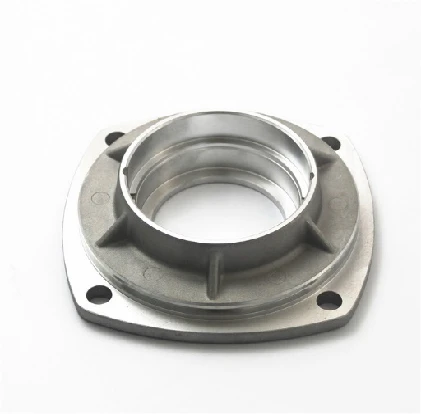
Mold Design and Manufacturing: Laying the Precise Foundation for Electric Rearview Mirror Housings
The mold is key to die-casting for electric rearview mirror housings. Designers must consider the housing's complex shape, dimensional accuracy, and assembly needs, as it has irregular curves and fine structures like slots and holes for components. High precision in mold design is essential for accurate forming.
Molds are made of high-quality steel with high hardness, strength, and thermal stability to withstand high-temperature and high-pressure during die-casting. Advanced CNC and EDM technologies shape the cavity and core to match the housing's design. Even small deviations can cause defects. Proper gate and runner design ensures molten metal fills the cavity evenly, preventing issues like cold shuts, laying a solid foundation for quality.
Die-Casting Process: Endowing Electric Rearview Mirror Housings with Perfect Form
With the mold ready, die-casting starts. Aluminum alloy, light, strong, and corrosion-resistant, is ideal. It's melted and injected into the mold cavity at high speed under high pressure via a die-casting machine. Pressure and speed control are critical: too low pressure leads to incomplete forming; too high damages the mold and causes burrs.
For complex housings, fast and stable filling ensures even metal distribution, avoiding turbulence and gas entrapment to reduce pores and shrinkage. When the cavity is filled, the machine quickly applies pressure to make the solidifying metal crystallize under pressure, boosting density and strength for reliable use.
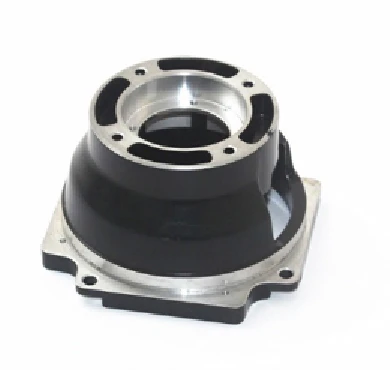
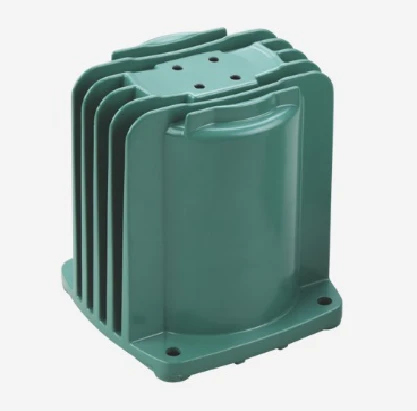
Post-Processing Procedures: Enhancing the Quality Connotation of Electric Rearview Mirror Housings
After die-casting, the housing needs post-processing. First, demolding uses an ejection device, with care to avoid scratches or deformation. Then, deburring and flash removal via grinding and punching make the surface smooth.
Surface treatment is vital for quality and aesthetics. Anodizing forms a hard oxide film, enhancing corrosion resistance and hardness. Painting adds various colors per car design, boosting aesthetics. High-end models may use vacuum coating for unique effects and better protection. These procedures turn the semi-finished housing into a high-quality part, integrating well into the car's design and function.