

For manual transmission models, the clutch is an important part of the automotive power system, which is responsible for cutting off and connecting the power and the engine. When driving on urban roads or complex road sections, the clutch has become one of the most frequently used components, and the quality of the clutch directly reflects the level of driving and also plays a role in protecting the vehicle. How to use the clutch correctly and master the principle of the clutch to use the clutch to solve problems in special situations is what every driver of a manual transmission model should master.
The so-called clutch, as the name suggests, is to use "off" and "close" to transmit the right amount of power. The clutch is composed of friction plates, spring plates, pressure plates and power take-off shafts, which are located between the engine and the gearbox, and are used to transmit the torque stored on the engine flywheel to the gearbox to ensure that the vehicle transmits the appropriate amount of driving force and torque to the driving wheels under different driving conditions, which belongs to the category of powertrain. In the case of semi-linkage, the power input end of the clutch and the power output end are allowed to have a speed difference, that is, the appropriate amount of power is transmitted through its speed difference.
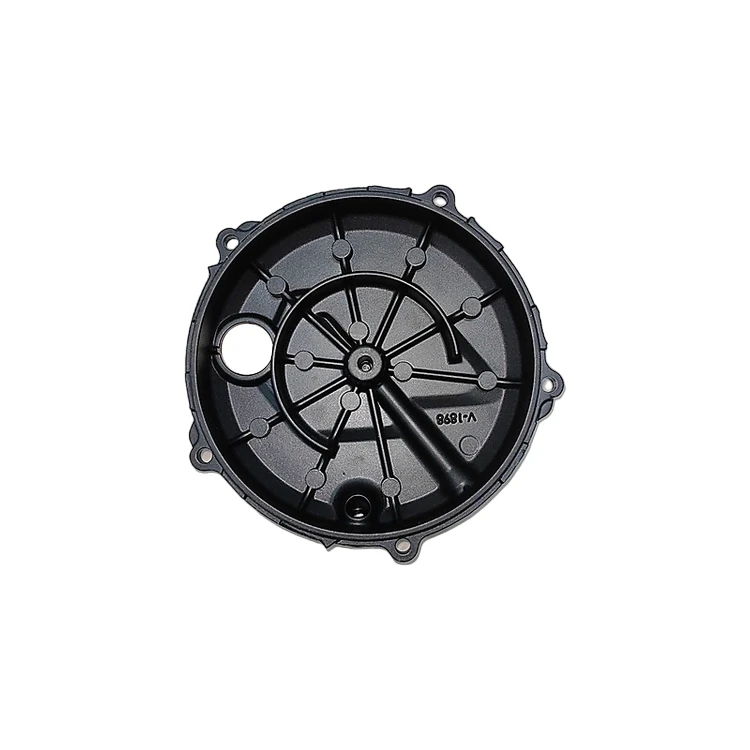
The clutch is divided into three working states, namely non-linkage when the clutch is pressed, full linkage when the clutch is not pressed, and semi-linkage when the clutch is partially pressed. When the vehicle starts, the driver steps on the clutch, and the movement of the clutch pedal pulls the pressure plate backwards, that is, the pressure plate is separated from the friction plate, and the pressure plate and the flywheel are not in contact at all, and there is no relative friction. When the vehicle is running normally, the pressure plate is tightly squeezed on the friction plate of the flywheel, and the friction between the pressure plate and the friction plate is the largest, and the relative static friction is maintained between the input shaft and the output shaft, and the speed of the two is the same. The last is the semi-linked state of the clutch, and the friction between the pressure plate and the friction plate is less than that of the fully linked state. At this time, there is a state of sliding friction between the clutch pressure plate and the friction plate on the flywheel, and the speed of the flywheel is greater than the speed of the output shaft, and the power transmitted from the flywheel is transmitted to the gearbox. In this state, the engine and the drive wheels are in a state of soft connection.
Generally speaking, the clutch plays a role when the vehicle starts and shifts, at this time there is a speed difference between one shaft and two shafts of the gearbox, and the power of the engine must be cut from the one shaft, so that the synchronizer can keep the speed of one shaft well synchronized with the two axles. After the gear is engaged, the clutch combines the first axle with the engine power, so that the power continues to be transmitted. In the clutch, there is also an indispensable cushioning device. It consists of two discs similar to flywheels together, with rectangular grooves on the discs, and springs are arranged in the grooves, and when encountering fierce impacts, the springs between the two discs interact with each other elastically, cushioning external stimuli, and effectively protecting the engine and clutch.
In the various parts of the clutch, the strength of the pressure plate spring, the friction coefficient of the friction plate, the diameter of the clutch, the position of the friction plate and the number of clutches are the key factors that determine the performance of the clutch. The greater the stiffness of the spring, the higher the coefficient of friction of the friction plate, and the larger the diameter of the clutch, the better the clutch performance.