

Foundational Manufacturing: Precision Shaping of Components
At its core, a CNC machine is designed for accurate material removal and shaping, integrating multiple processing capabilities to create complex parts in one setup. Key functions include:
Multi-process integration
It combines milling, drilling, tapping, and boring, eliminating the need for repeated clamping of workpieces. For example, reducer casings in mechanical manufacturing can complete multi-surface processing in a single operation, reducing positioning errors by over 60% compared to traditional machines .
High-precision contro
Guided by digital programs, it achieves positioning accuracy within ±5μm, meeting strict tolerance requirements such as ISO 2768-mK in the medical industry . Adaptive control systems (e.g., Siemens OMATIVE ACM) further optimize cutting parameters in real-time, preventing tool damage and ensuring consistent precision .
Material versatility
It processes metals (aluminum, titanium alloy, stainless steel), engineering plastics (PEEK), and composites. In aerospace, it handles titanium alloy structural components; in dentistry, it cuts medical-grade titanium for implants .
Industry-Specific Applications: Driving High-Value Manufacturing
CNC machines are tailored to meet the unique demands of key industries, with specialized configurations enhancing productivity and part quality:
Aerospace & Aviation
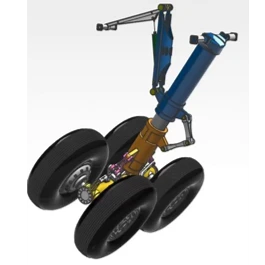
Complex component machining: Five-axis CNC machines, which control X/Y/Z linear axes plus two rotational axes (A/B), process turbine blades, landing gear, and engine casings . Their multi-angle cutting avoids repeated setup, reducing production cycles for aircraft structural parts by 40% .
High-strength material handling: Adaptive systems protect tools when cutting tough materials like nickel-based alloys, ensuring the integrity of engine rotating components (GE-certified for such applications) .i
Automotive Manufacturing
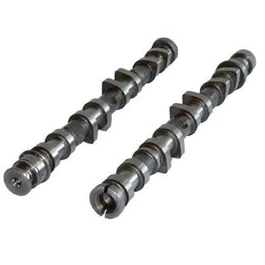
Mass production of core parts: Vertical/horizontal machining centers, paired with automated loading systems, process engine blocks, camshafts, and transmission housings . The adaptive control detects material hard spots in castings, preventing drill breakage during cylinder bore machining .
Efficiency optimization: "Constant power" hobbing technology reduces gear processing time by 25% while minimizing tool wear, critical for assembly line productivity .
Medical Devices
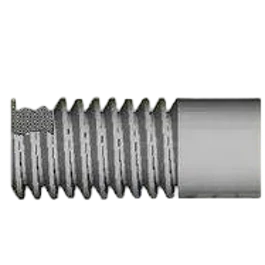
Customized implants: Five-axis CNC machines create patient-specific orthopedic implants (knees, hips) and dental implants with bionic thread structures . Integrating 3D scanning and AI modeling, they produce skull repair plates in 24 hours-cutting custom costs by 30-50% .
Micro-precision parts: It machines endoscopic components and cardiovascular stent tubes with wall thickness uniformity within 10μm, meeting FDA biocompatibility standards .
Mold & Tool Making
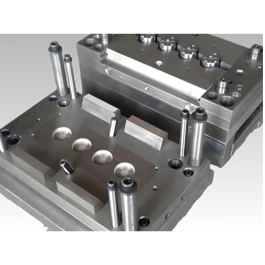
Complex surface machining: High-speed CNC centers carve precision curves on pre-hardened steel or graphite for injection molds and stamping dies . Unattended operation, enabled by tool wear monitoring, ensures 24/7 production of mold cavities .
Production Flexibility: Balancing Mass and Customized Manufacturing
A key advantage of CNC machines is adapting to diverse production scales through integrated systems:
Mass production
Flexible Manufacturing Systems (FMS) link CNC machines with automated storage, enabling 24/7 processing of standardized parts (e.g., electronic device housings) . Adaptive feeding reduces cycle times by 15-30% for high-volume runs .
Customization
Quick program adjustments allow small-batch production of specialized parts. For example, small CNC mills produce precision electronic components, while large gantry CNC machines handle custom heavy machinery frames .
High Strength
We offer a variety of transmission components, including sprockets, roller chains, gears, couplings, racks, hubs, pulleys, taper sleeves, bearing seats, and more.
Professional
We offer a variety of transmission components, including sprockets, roller chains, gears, couplings, racks, hubs, pulleys, taper sleeves, bearing seats, and more.
Conclusion
The main use of a CNC machine is to enable precise, efficient, and flexible manufacturing across industries. From aerospace's titanium alloy components to medical implants and automotive parts, it delivers consistent quality while adapting to both mass and custom production. Its integration with adaptive control, five-axis technology, and digital systems cements its role as a cornerstone of Industry 4.0, driving innovation and competitiveness in modern manufacturing.