

As we all know, the working temperature of electronic devices directly determines their service life and stability, in order to keep the working temperature of PC components within a reasonable range, in addition to ensuring that the temperature of the PC working environment is within a reasonable range, it is also necessary to dissipate heat. With the enhancement of PC computing power, power consumption and heat dissipation problems have increasingly become unavoidable problems.
Generally speaking, the largest heat sources in PCs include CPUs, motherboards, graphics cards, and other components such as hard drives, and a considerable part of the power consumed when they work will be converted into heat. Especially for the current high-end graphics card, the power consumption can easily reach 200W, and the heat generation of its internal components cannot be underestimated, and it is necessary to effectively dissipate heat to ensure its stable operation.
The first generation - the era when there was no concept of heat dissipation
In November 1995, the birth of Voodoo graphics cards brought our vision into the 3D world, and PCs have since had almost the same level of 3D processing capabilities as arcade machines, creating a real era of 3D processing technology. Since then, the development of graphics chips has been out of control, with the core operating frequency increasing from 100MHz to the current 900MHz, and the texture fill rate soaring from 100 million per second to 42 billion per second today (GTX480). In the face of such a big change in performance, the heat generation is conceivable, and heat dissipation equipment such as air cooling, heat pipes, and semiconductor cooling sheets are also used in the graphics card. Today, I will introduce to you the development and trend of mainstream graphics card cooling equipment.
When the Voodoo graphics card was first launched, there were no heat dissipation facilities, and the core parameters were naked in front of us. Compared to the current mainstream graphics cards, there was no talk of GPUs at the time. The processing power of the main core chip on the graphics card is even weaker than that of the current network card, so the heat generation is almost zero, and there is almost no need for additional heat dissipation equipment to assist.
The second generation - the use of heat sinks
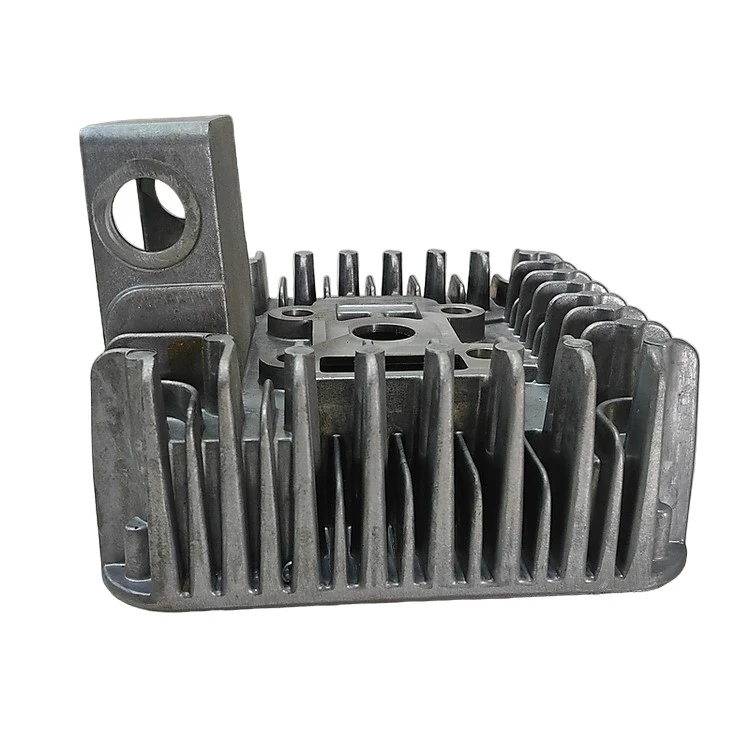
In August 1997, NVIDIA entered the 3D graphics chip market again and released NV3, that is, Riva 128 graphics chip, Riva 128 is a 128bit 2D, 3D accelerated graphics core, the core frequency is 60MHz, the heating of the core has gradually become a problem, and the use of heat sink has officially entered the field of graphics cards.
The third generation - the arrival of the era of air cooling and heat dissipation
The release of TNT2 was like a bombshell into the heart of 3dfx. The core frequency is 150MHz, it supports almost all 3D acceleration features at that time, including 32-bit rendering, 24-bit Z-buffering, anisotropic filtering, panoramic anti-aliasing, hardware convex and concave mapping, etc., performance enhancement means that the core heating increases, but there is no great progress in the process is still used 0.25 microns, so the passive way of heat sink can no longer meet the current needs, and the active heat dissipation method has officially entered the stage of the graphics card.
Using Leadtek's patented cooling system TwinTurbo-II (the second generation of full-coverage twin turbo cooling fans), the heatsink completely covers the entire card, and the air will enter and exit through the two fans in one direction during startup, which can effectively remove the heat of the chip and video memory quickly. In addition, two ball bearing fans can effectively reduce noise, and the metal heat sink ensures a longer life.
Although a high-speed fan is the best solution to the heat dissipation problem, some friends can't stand the noise of a "range hood" while enjoying the endless fun of 3D games. Fortunately, the application of heat pipe technology solves this problem, which is generally composed of a core heat absorber block, a back heat absorber block, two large-area heat sinks and a heat pipe. As a passive heat conduction device, the heat pipe is quickly transferred from the heat-absorbing section to the heat-dissipating section through the phase change of the internal working fluid, and then relies on the internal capillary structure to flow back to the heat-absorbing section, which is reciprocating, does not consume electricity and does not produce noise, and has strong heat conduction ability, which is an effective means to realize rapid heat transfer in a limited space, thereby increasing the heat dissipation area, and greatly improving the passive heat dissipation effect. However, this heat dissipation method still has disadvantages, because the heat dissipation capacity is not strong enough, it can only be used on mid-range cards, and if you want to use this technology, you must add a fan at the high-end.