

Structural features
Handle section
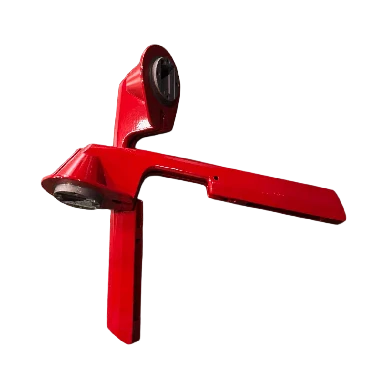
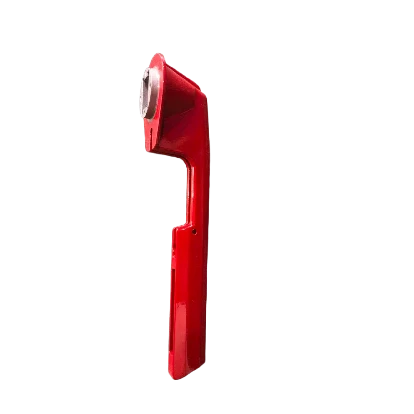
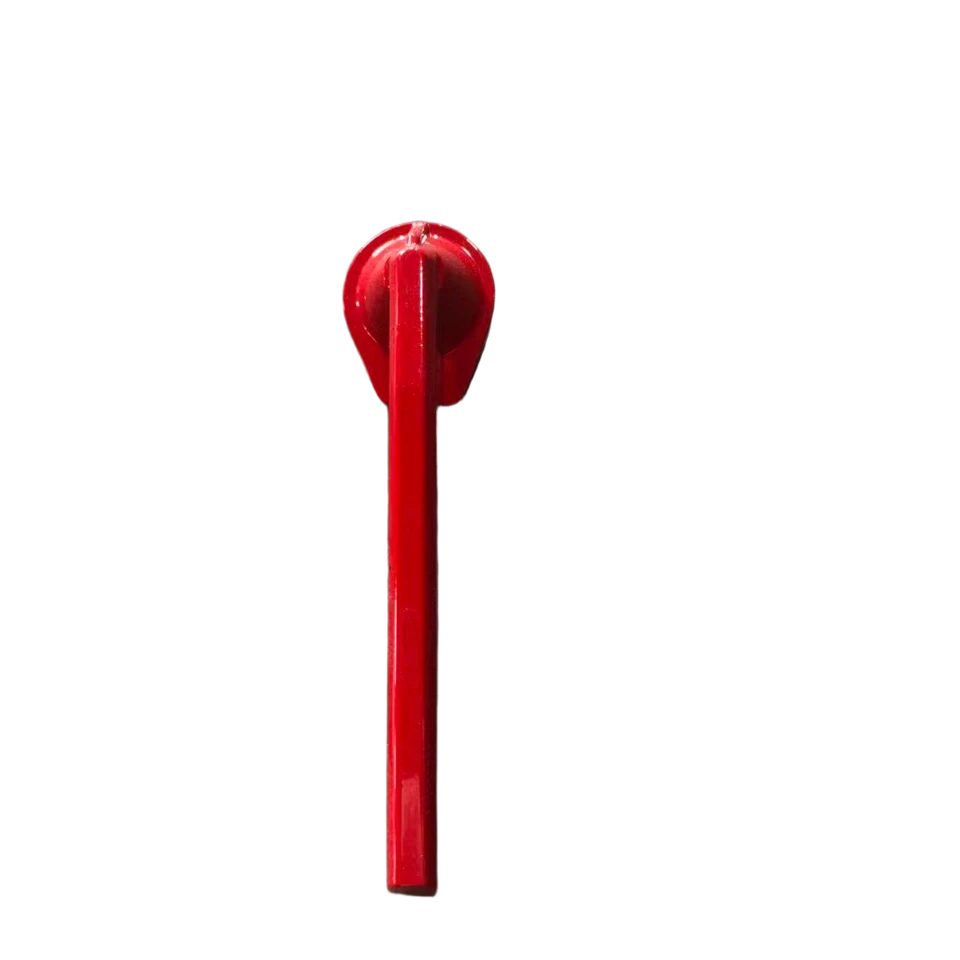
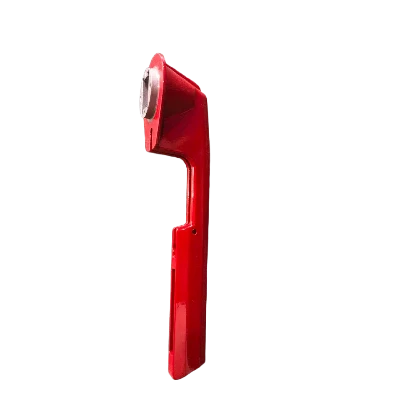
Usually adopts an ergonomic design. For example, this red hand shank has a grip area that may be specially treated to provide a comfortable grip, reducing the fatigue of the operator during use and effectively preventing hand slippage, ensuring operational safety.
Head structure
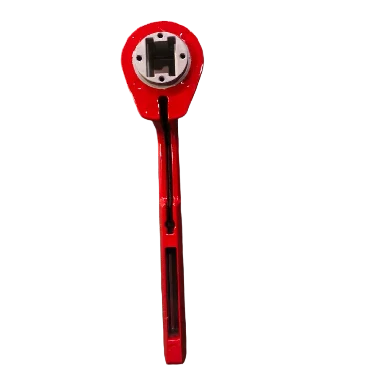
The head has a specific specification interface for connecting accessories such as sleeves, thus adapting to different-sized bolts and nuts. The square hole in the middle of the wrench head in the picture is used to connect the corresponding sleeve head. In addition, the head may also be equipped with precise torque measurement and control devices to ensure the accuracy of torque application.
Working principle
The internal part of the torque wrench is equipped with a torque measurement mechanism. When the operator rotates the wrench with force, the internal sensor or mechanical device will continuously monitor and provide feedback on the torque value. Once the torque reaches the preset value, the wrench will alert the operator in a specific way. Common alert methods include audible cues (clicking sound), visual cues (indicator light), and tactile feedback (the wrench suddenly becomes stuck).
The uses of torque wrenches
Financial Big Data
Precise control of torque: In fields such as mechanical manufacturing, automotive repair, aerospace, etc., there are strict standards for the tightening torque of many bolts and nuts. Using a torque wrench allows for precisely tightening bolts and nuts to the set torque value, preventing connection loosening due to insufficient torque, which can affect the normal operation of equipment and even cause safety accidents; it also avoids the situation where bolts are stretched, deformed, or even broken due to excessive torque, damaging components.
Quality control
In large-scale production processes, ensuring that the assembly torque of each component is consistent is the key to ensuring the stability of product quality. Torque wrenches can make the assembly quality of products reach a unified standard, reducing the rate of product nonconformity caused by assembly problems, such as in the production of electronic products, where the connection of precise components has extremely high torque requirements, and torque wrenches can ensure the consistency of product quality.
Testing and maintenance
Besides for assembly, torque wrenches can also be used during equipment maintenance and repair to detect if bolts are loose. By measuring the current torque value of the bolt, it can determine whether it is within the specified range, and promptly detect and handle potential safety hazards. For example, in regular inspections of bridges, large construction machinery, etc., torque wrenches are used to detect the bolt tightening condition of connecting components.
FAQ
Q: What is a torque wrench?
A: A torque wrench is a precision tool used to tighten fasteners such as bolts and nuts to a specific preset torque value. Its main function is to ensure that the tightening force is just right, neither too loose causing loosening nor too tight causing thread wear or bolt fracture.
Q: Why is the use of a torque wrench so important?
A: Safety: In fields such as automobiles (especially wheels, engines, chassis), aerospace, and construction engineering, the tightness of fasteners directly affects life safety. Loosely fastened wheel hub nuts may cause the wheels to come off. Guarantee quality: In the assembly of mechanical equipment, the correct torque ensures that the components are evenly stressed, have good sealing, and operate smoothly, avoiding deformation or damage caused by uneven stress. Protecting parts: Prevent damage to expensive parts (such as engine cylinder bore threads, carbon fiber components) or the bolts themselves due to excessive tightening.
Q: What is the unit of torque?
A: Common units include: Newton meter: An international standard unit, the most commonly used. Pound-foot: An imperial unit, widely used in North America. Kilogram-force meters: This is also sometimes encountered.
Q: What are the main types of torque wrenches?
A: Pre-set (click-type): The most commonly used type. The torque value is preset in advance. When the applied torque reaches the set value, the wrench will emit a clear "click" sound accompanied by a tactile disengagement sensation. The advantage is that it is reasonably priced and easy to use. Digital type (electronic type): Measuring torque through electronic sensors and displaying the real-time torque value on a digital screen. High accuracy, data can be stored, and equipped with audible and visual alarms. Suitable for high-precision and record-keeping operations. Pointer type (dial type): It has a dial and a pointer, which can display the current applied torque value in real time. The advantage is that the reading can be seen intuitively, but the operator needs to keep looking at the dial, which is not as convenient as the click type. Slider type (torsion rod): Simple structure, low cost. The reading is obtained by observing the relative displacement between the scale on the rod body and the handle. The accuracy is relatively low and is mostly used in situations where high precision is not required. Part Two: Selection and Purchase
Q: How can I choose the right torque wrench for myself? Consider the following points:
A: Usage scenarios: DIY for home use? Professional auto repair? Assembly of precision instruments? The precision requirement is determined based on the specific needs. Torque range: What is the torque range for the bolts you need to tighten? For example, the lug nuts of car wheels might require 80-150 N·m, while precision electronic products might only need 0.5-5 N·m. Choose a wrench that covers your usual range, and it is best to use it within 20%-80% of its range for the highest accuracy. Drive head size: Common sizes include 1/4 inch, 3/8 inch, 1/2 inch and 3/4 inch. The larger the size, the greater the torque it can withstand. For home DIY projects, 3/8 inch is commonly used, while for car tires, 1/2 inch is more common. Budget: The preset type offers the highest cost-effectiveness. The digital display type is the most expensive but has powerful functions.
Q: Can I buy a second-hand torque wrench?
A: Yes, but be cautious. Torque wrenches are precision tools and their internal mechanisms may become inaccurate due to dropping or misuse. After purchasing a second-hand wrench, it is best to send it to a professional institution for calibration to ensure its accuracy. Part 3: Usage and Operation
Q: How to use the preset (click-type) torque wrench?
A: Set the torque value: Unlock the locking mechanism at the end of the wrench (usually by rotating or pulling it out), rotate the handle, align the scales of the main ruler and the secondary ruler to the desired torque value, and then lock it. Select the appropriate socket: Install the correct socket on the drive head of the wrench. Apply force steadily: Tighten the nut with the sleeve, and pull the handle at a steady and slow pace. Avoid using explosive force or pulling forcefully. Upon hearing the instruction: When the torque reaches the preset value, you will hear and feel a distinct "click" sound. At this point, you should immediately stop applying force. Reset: After use, adjust the torque value to the minimum to relax the internal spring and extend the lifespan of the wrench.
Q: What are some common mistakes when using a torque wrench?
A: For use as a regular wrench: It is strictly prohibited to use the torque wrench to finally loosen the bolts, or to use it as a regular wrench to repeatedly and rapidly twist. Using an extended rod: Applying an extension tube to the handle to "save effort" will significantly damage the wrench and cause the torque value to be severely inaccurate. Apply force from the tail of the wrench: The point of application of force should always be within the holding area marked on the handle. Ignore the "clicking" sound: After hearing the sound, continue to exert force, as this could result in over-tightening and damage to the wrench. Incorrect storage: Failure to reset the storage will cause fatigue of the internal spring.
Q: Do torque wrenches need to be calibrated? How often should they be calibrated?
A: Yes, they must be calibrated regularly. Calibration cycle: For professional users, it is recommended to calibrate the wrench every 5,000 uses or every 12 months. If the wrench has been dropped, hit, or if there is any suspicion of inaccuracy, it should be calibrated immediately. Calibration institution: It needs to be sent to a qualified metrological verification institution for calibration. Part Four: Maintenance and Storage
Q: How to properly store and maintain the torque wrench?
A: leaning: After use, wipe clean with a cloth. Reset: For preset wrenches, after use, make sure to adjust the torque value to the minimum of its range to release the tension of the internal spring. Special storage box: Store it in the original or dedicated box to prevent it from colliding with other tools. Weatherproof and shockproof: Store in a dry and vibration-free place. Handle with care: Avoid dropping or colliding.
Q: Can the torque wrench be sent by mail or checked in as luggage?
A: Yes, but it must be properly protected. Make sure to set its torque value to zero, place it in the original packaging box, and then fill the outer packaging box with cushioning materials to prevent vibrations and impacts during transportation.
Ningbo Zhouchi Vehicle Industry Co., Ltd. was founded in 1992, located in Binhai Industrial Park of the beautiful coastal port city -Ningbo. Now our company covers the total area of 16000 square meters, with 150 staffs, including 20 quality inspectors and engineers. Our turnover is around12 Millions USD. Our company specializes in Aluminum Die-casting and Zinc Die-casting, CNC machining and assembling.
Quality Assurance
We have 100% quality guarantee to customers. We will be responsible for any quality problem.
Competitive Prices
We offer ODM service for customer with good quality and reasonable price.

12MLN
Estimated Turnover
150+
Professional Staff
100+
Annual Production of Molds
70%
For Export
our certifications
ISO 14001:2015
The ISO 14001:2015 certificate is an internationally recognized document that indicates that an organization has established, implemented, maintained, and continuously improved an environmental management system (EMS) that complies with the requirements of ISO 14001:2015.
This certificate certifies that the environmental management system of this organization has met international standards, enabling it to systematically manage its environmental responsibilities and commit to sustainable development.

IATF16949:2016
IATF 16949:2016 is an international standard for quality management systems in the automotive industry. It was developed by the International Automotive Task Force (IATF) and was released in October 2016, replacing the previous version of ISO/TS 16949:2009.
The core objective of IATF 16949 is to continuously improve, prevent defects, reduce variations and waste in the automotive supply chain. It aims to ensure that the design and manufacturing of automotive products (including components and materials) can always meet customer requirements and even exceed customer expectations.

our Partners
Our company has established long-term friendly and cooperative partnerships with Suzuki China factory, Peugeot China factory, Schneider Electric and other foreign and domestic well-known enterprises.
We trusted by












Hot Tags: Hand Shank, China Hand Shank manufacturers, suppliers, factory