

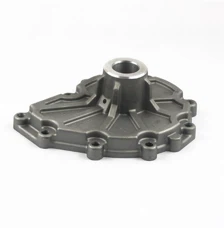
Aluminum die casting is a metal casting method that uses high pressure to quickly inject liquid aluminum alloy into the mold cavity and solidify it under pressure. Compared with traditional casting processes, it has many significant advantages. Firstly, aluminum die casting can realize the one-time forming of complex parts, greatly reducing subsequent processing procedures. The part in the picture has an exquisite structure with multiple holes and cavities of different shapes. Through the aluminum die casting process, these complex structures can be accurately shaped without multiple assembly or a large amount of cutting processing, effectively improving production efficiency.

Facilitating the efficient development of industries
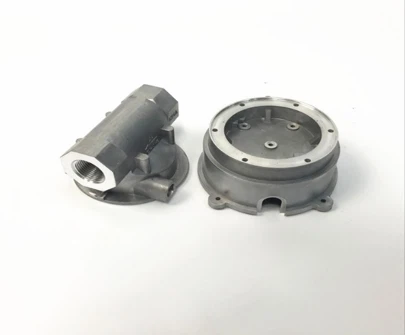
Secondly, aluminum itself has the characteristics of low density and light weight. Parts formed by die casting can significantly reduce the overall weight of the car, which is crucial for improving the fuel economy of traditional cars and the driving range of new energy vehicles. At the same time, aluminum alloy has good mechanical properties. By controlling reasonable die casting process parameters, such as die casting pressure and mold temperature, parts can obtain high strength and hardness, meeting the mechanical requirements for parts during the driving of the car and ensuring driving safety.
From the perspective of industry development, the automotive industry has increasingly higher requirements for the precision, consistency, and production efficiency of parts, and aluminum die casting technology can just meet these needs. It can achieve large-scale and high-precision production, ensuring that each part has a high degree of consistency, which is extremely important for the assembly and overall performance stability of the car.
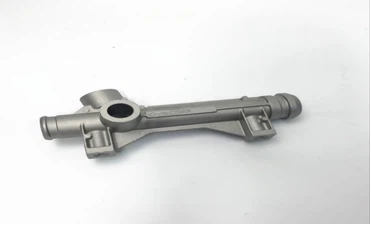
In the application scenarios of auto parts, aluminum die-cast parts can be seen in many key parts such as the engine system, transmission system, and chassis system. The part in the picture is likely a key component in a certain core system of the car, and its quality is directly related to the operating status of the car.


As the automotive industry continues to move towards electrification and intelligence, the requirements for lightweight and integrated parts will be further enhanced, and aluminum die casting technology is also continuously developing and innovating. For example, the research and development of new die-cast alloy materials can further optimize the performance of parts; the progress of mold design and manufacturing technology allows more complex and integrated parts to be produced through the die casting process. Aluminum die casting suppliers are also continuously improving their technical level and production capacity to adapt to the new changes and needs of the industry and provide more powerful support for the upgrading and development of the automotive industry. It is foreseeable that the application of aluminum die casting technology in the field of auto parts will be more extensive and in-depth, promoting the automotive industry to continuously reach new heights.
Process Flow
Mold Design and Manufacturing
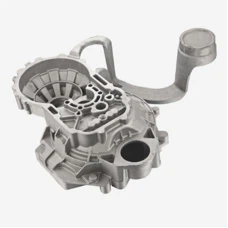
Product Analysis: Technicians conduct a comprehensive analysis of the parts to define requirements such as dimensional accuracy, surface quality, and mechanical properties. For instance, for the part with multiple holes and complex cavity structures shown in the picture, key dimensional tolerances of each part need to be determined. For example, the diameter tolerance of the holes must be controlled within a very small range to ensure the accuracy of subsequent assembly.

Mold Design: Based on the product analysis results, the mold is designed. The mold is generally divided into two parts: the fixed mold and the movable mold. When designing, the selection of the parting surface, the layout of the gating system (including gates, runners, etc.), the exhaust system, and the cooling system should be considered. For this part, to ensure that the aluminum alloy liquid can fill the cavity evenly, the position and size of the gate need to be carefully designed, and a reasonable exhaust groove should be set to prevent defects such as air holes during the die-casting process.
Mold Manufacturing: The mold is manufactured through processes such as machining (such as milling, electric discharge machining, etc.) and heat treatment. The mold material is usually hot work die steel, and after quenching, tempering and other heat treatment processes, the hardness, wear resistance and thermal fatigue performance of the mold are improved to ensure that the mold can work stably in the high temperature and high pressure die-casting environment and prolong its service life.

Aluminum Alloy Melting
Raw Material Preparation: Select suitable aluminum alloy ingots as raw materials. Common aluminum alloys used for die casting include ADC12, A380, etc. At the same time, some alloying elements, such as silicon (Si), magnesium (Mg), copper (Cu), etc., are added as needed to adjust the performance of the aluminum alloy to meet the requirements of the parts.

Melting: Put the aluminum alloy ingot into the melting furnace for heating and melting. During the melting process, the temperature and time should be strictly controlled, and the temperature is generally controlled at about 700 - 750°C. At the same time, methods such as stirring are used to make the composition of the alloy liquid uniform, and refining treatments such as degassing and deslagging are used to remove gases and impurities in the aluminum alloy liquid, improve the purity of the alloy liquid, and reduce defects such as air holes and slag inclusions inside the parts after die casting.

Die Casting Molding
Mold Preheating: Before die casting, preheat the mold to a certain temperature, generally between 150 - 250°C. Preheating the mold can reduce the temperature difference between the aluminum alloy liquid and the mold, reduce thermal stress, improve mold life, and help the aluminum alloy liquid flow and fill better in the cavity, avoiding defects such as cold shut and insufficient pouring.
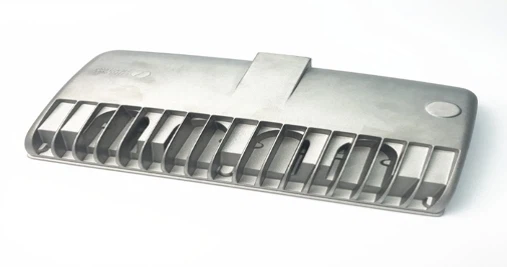
Clamping and Injection: Install the preheated mold on the die-casting machine. After clamping, the molten aluminum alloy liquid is quickly injected into the mold cavity at high pressure (generally tens to hundreds of megapascals) through the injection system of the die-casting machine. For this part, due to its complex structure, it is necessary to precisely control the injection speed and pressure to ensure that the aluminum alloy liquid can quickly and evenly fill every corner of the cavity to form a complete and dense part.

Pressure Holding and Cooling: After the aluminum alloy liquid fills the cavity, maintain a certain pressure (pressure holding) for a period of time to make the aluminum alloy liquid further feed under pressure and eliminate defects such as shrinkage holes and porosity caused by cooling shrinkage. Then, the mold is cooled through the cooling system of the mold, so that the aluminum alloy liquid gradually solidifies and forms. The cooling time depends on the size and thickness of the part, generally ranging from a few seconds to tens of seconds.
Mold Opening and Part Removal: When the aluminum alloy is completely solidified, open the die-casting mold and use the ejection mechanism to eject the formed part from the mold.

Post-Processing
Deburring and Cleaning: After the parts are taken out, there may be some burrs, flash, etc. on the surface, which need to be removed by mechanical processing (such as grinding, milling) or chemical treatment (such as pickling). At the same time, clean the residual release agent and other impurities on the surface of the parts to make the surface of the parts reach the required finish.
Heat Treatment: According to the performance requirements of the parts, appropriate heat treatment, such as aging treatment, is carried out. Through aging treatment, the strength, hardness and dimensional stability of the aluminum alloy can be improved to meet the mechanical performance requirements of the parts in application scenarios such as automobiles.

Quality Inspection: Use a variety of testing methods to inspect the quality of parts, such as appearance inspection (to detect whether there are cracks, air holes and other defects on the surface), dimensional measurement (to ensure that the dimensions of parts meet the design requirements), mechanical performance testing (to detect the strength, hardness, etc. of parts), and non-destructive testing (such as X-ray testing, ultrasonic testing, to check whether there are defects inside the parts). Only qualified parts can enter the subsequent assembly process.

Packaging and Storage
After cleaning and anti-rust treatment of qualified parts, they are packaged according to certain specifications and requirements, and then stored in the warehouse, waiting for delivery to customers.
