

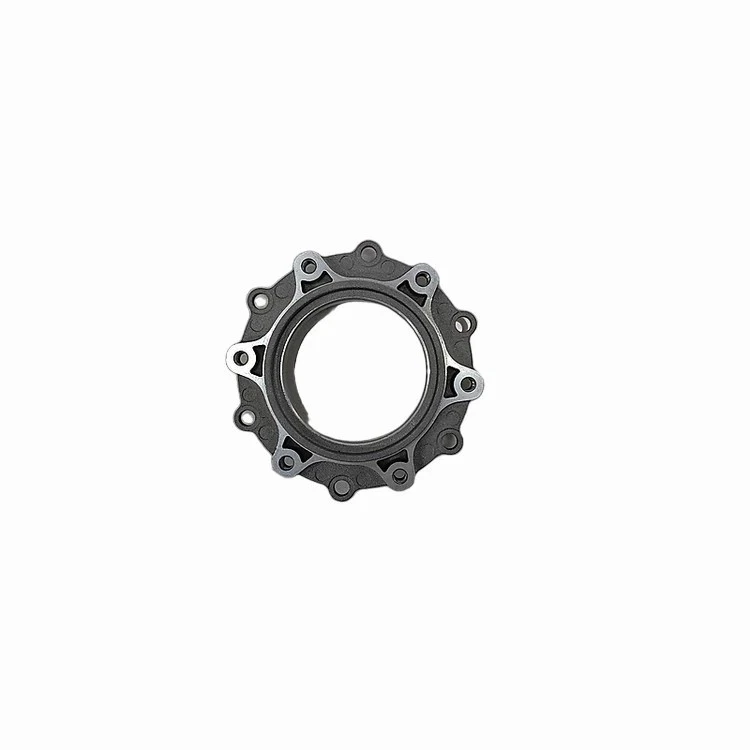

Cover Top Flange is an important component for connecting pipes and fittings, usually composed of two flanges with the same connection surface, fixed in the middle by bolts and washers. The main function is to connect two sections of pipelines or between pipelines and equipment to achieve sealing effect, while also bearing the pressure and tension of the medium inside the pipeline.

The main function of the lower flange is to connect and seal, used to connect two pipelines, critical or equipment, and ensure the sealing of the connection to prevent medium leakage. Its function also includes the advantages of withstanding pressure, temperature, and vibration, as well as convenient disassembly.

The Stay ring lower flange ring can effectively connect the seat ring with related equipment or pipelines, thereby ensuring the air tightness of fluid flow inside the equipment or pipelines; By strengthening the connection parts of the equipment, the overall strength and stiffness of the equipment can be improved, thereby maintaining stability when subjected to large external forces or vibrations.

The upper flange is a component that connects pipes to each other, connected to the top of the pipe. Its main functions include fixing and sealing, tightening the connection, convenient disassembly and maintenance, strong applicability, simple structure, and low cost. It has a wide range of applications in various industrial fields.

CNC flange can be precisely machined into various specifications and shapes, thereby achieving the connection and sealing of various pipelines, valves, pumps, and containers. Featuring high precision and stability. Customized design can be carried out according to different needs.
Ningbo Zhouchi Vehicle Industry Co., Ltd. was founded in 1992, located in Binhai Industrial Park of the beautiful coastal port city -Ningbo. Now our company covers the total area of 16000 square meters, with 150 staffs, including 20 quality inspectors and engineers. Our turnover is around12 Millions USD. Our company specializes in Aluminum Die-casting and Zinc Die-casting, CNC machining and assembling.
Why Choose Us
Experienced Team
Our team of engineers and technicians has years of experience in the industry, and we leverage that expertise to provide our clients with the best possible solutions.
Exceptional Customer Service
We pride ourselves on providing exceptional customer service and technical support to our clients, ensuring that they have a smooth and hassle-free experience.
Quality Products
We use only the highest-grade materials and advanced manufacturing techniques to produce products that are reliable, durable, and perform to the highest standards.
Competitive Price
We have professional sourcing team and cost accounting team, stive to reduce cost and profit and provide you a good price.
Sustainable Development
Establish a good reputation and brand value in the industry, and promote the sustainable, stable, rapid and healthy development of the enterprise.
One Stop Solution
From the begining inquiry and throughout the entire process until you receive the goods. we are dedicated to supporting you every step of the way.
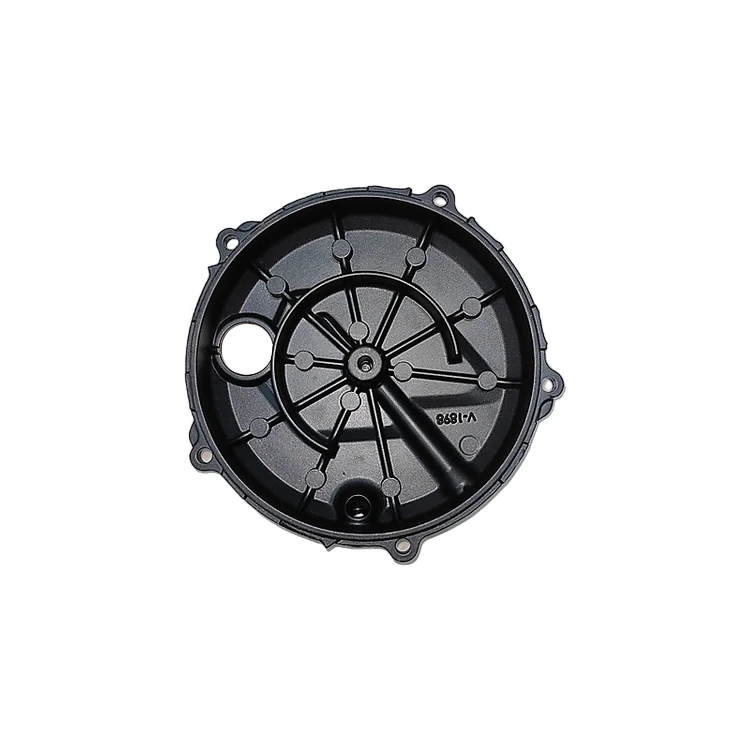
CNC flange can be precisely machined into various specifications and shapes, thereby achieving the connection and sealing of various pipelines, valves, pumps, and containers. Featuring high precision and stability. Customized design can be carried out according to different needs.
Characteristics of Flange
Flanges are vital components in piping systems, and they have several important characteristics that improve their functionality:
Flanges are supplied with precisely drilled holes, allowing for quick and exact assembly with other piping elements. This function speeds up installation procedures, reducing the possibility of misalignment or poor fitting.
Flanges are manufactured with a method that regulates grain flow, increasing their strength and stiffness. This structural integrity allows flanges to endure the rigors of pressure and forces within pipe systems, lowering the risk of deformation or failure.
Flanges are designed with machined bevels to improve welding processes. These bevels ensure smooth transitions between the flange and adjacent pipes, resulting in uniform and secure weld connections. Proper welding techniques are critical for ensuring the integrity and leak resistance of the piping system.
Flanges have a smooth and perfectly bored inner surface to allow for uninterrupted flow throughout the piping system. This design reduces frictional losses and pressure differentials, allowing for efficient fluid conveyance without blockages.
Flanges are equipped with spot-facing, a machining procedure that ensures the flatness and squareness of the flange surface where fasteners are installed. This guarantees solid fastening and even distribution of bolt loads, reducing the possibility of leaks or loosening over time.
The Flange Manufacturing Process
The flange manufacturing process involves multiple stages of precision engineering and manufacturing to create vital components used in a variety of industrial applications. In piping systems, flanges, usually discs with holes, are used to connect pipes, valves, and other mechanical components. The secure, leak-proof connections they provide ensure the safe and efficient movement of liquids or gases.
Material Selection
The first step in the Flange Machining Process is the selection of suitable materials. Flanges are commonly made from metals such as carbon steel, stainless steel, or alloy steel, chosen based on the specific application requirements such as temperature, pressure, and corrosive environment.
Cutting and Shaping
The chosen material is then chopped and shaped after being chosen. Large metal plates are initially divided into smaller pieces to achieve the necessary size for the flange. Then, in preparation for further processing, the formed portions are heated to an appropriate temperature.
Forming and Forging
The metal parts become pliable during the heating process, enabling the formation of the correct flange shape. Different methods, such hot forging or cold forging, can be used. In cold forging, the metal is shaped at normal temperature, but in hot forging, the heated metal is fashioned using a die under high pressure.
Machining
The flange is machined to attain exact tolerances and to refine its dimensions after the initial forging and forming. This comprises procedures like chamfering edges, facing sealing surfaces, and drilling holes for bolt connections. Precision and automated machining are frequently accomplished with CNC (Computer Numerical Control) machines.
Heat Treatment
The flanges may go through heat treatment procedures including annealing, quenching, or tempering according on the material and use. The strength, hardness, and resistance to wear and corrosion of the flange are improved through heat treatment, which also increases its mechanical qualities.
Inspection and Quality Control
A crucial step in the production of flanges is quality control. To make sure they adhere to the necessary norms and specifications, flanges go through a thorough inspection process. Dimensional inspections, surface finish analysis, and non-destructive testing techniques like ultrasonic or magnetic particle testing are all included in this to look for any flaws.
Surface Finishing
Flanges may be subjected to surface finishing procedures like grinding or polishing to obtain the desired smoothness, get rid of surface flaws, and enhance their overall appearance.
Coating or Plating
Flanges may go through coating or plating treatments to increase their ability to withstand corrosion or offer additional protection. Galvanising, epoxy coating, or the use of corrosion-resistant metals are popular alternatives.
Final Inspection and Packaging
The flanges go through a final examination after the production process is finished to make sure they adhere to all the necessary requirements and quality standards. To avoid any damage during storage and shipping, they are neatly wrapped.
The Flange Manufacturing Process requires skilled engineering and adherence to stringent quality control measures to ensure that the final product meets the necessary performance and safety requirements. Flanges produced through this meticulous process are essential components in industries such as oil and gas, petrochemical, power generation, and many others, enabling the efficient and reliable operation of piping systems.
Applications of Flanges
Petrochemicals, pharmaceuticals, heat exchangers, and power generation are some of the industries that use alloy 20 flanges. In addition, paper manufacturing, oil and gas, and textile industries all use alloy steel flanges. The Weld Neck Flanges are primarily used in high-pressure applications over a wider temperature range, ranging from sub-zero to elevated temperatures. Chemicals, pharmaceuticals, petroleum, and gas industries, among others, use them in large quantities. In other words, bulk pipes are used in almost every industry. Flanges are used in a number of applications.
Plumbing
Soldering or fastening two sections of metal piping together can be done, but pipes connected this way are very vulnerable to bursting at high pressures. Flanged ends that can be linked with bolts provide a more secure connection between two sections of pipe. This ensures that the pipe will usually hold even if gases or liquids build up to high pressures inside it.
Mechanics
It's usually a good idea to use Stainless Steel 304L Flanges and bolts to link two sections of an oversized, enclosed area. A good example is the relationship between the engine and the transmission in a car. Both the engine and the transmission in this case have several components that can be damaged quickly if they make contact with dust or other small items. Engineers protect the inner workings of the engine and transmission by connecting the outer casings of both.
Electronics
316L stainless steel is another kind of stainless steel which is used in the production of stainless steel products. Flanges are important in cameras and other electronic devices. Flanges in camera systems and other digital equipment will not have to sustain heavy pressures; rather, they connect two separate parts, such as a lens glass and the rest of the camera's body.
Oil and Gas Companies
The most common application for long weld neck flanges is on vessels that require a larger neck. This is a specialty flange because of the projecting neck or hub that serves as a regular extension. The tapered neck aims to minimize the steel's thickness, giving it the appearance of a pipe extension. Steel Long Weld Neck Flanges are primarily used in industries with high levels of stress and temperature fluctuations, such as the crude oil and chemical industries.
7 Common Types of Flanges


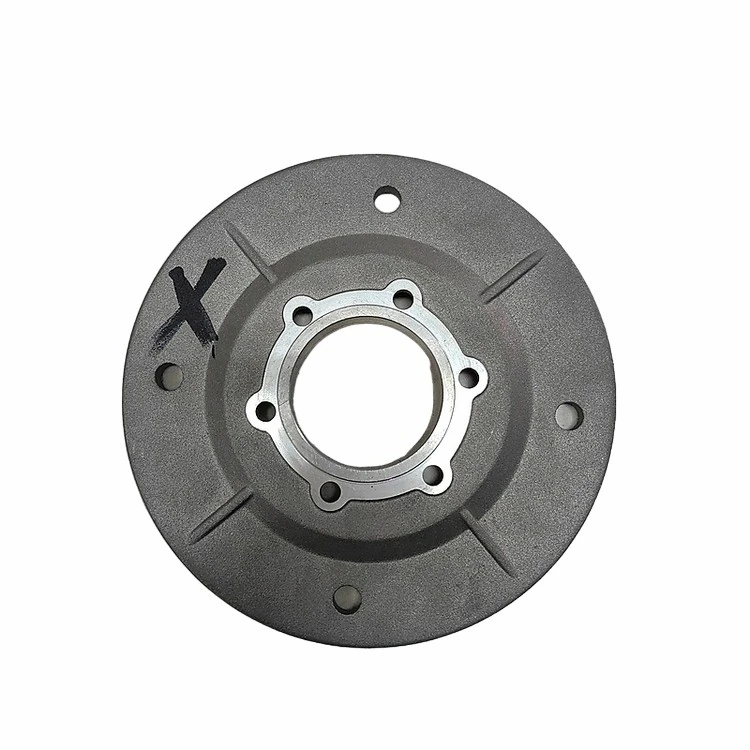

There are many types of flanges, which can be selected according to the site requirements. To match the ideal flange design, reliable operation and long service must be ensured, and optimal pricing should be considered. Scroll down to see the most common flange types commonly available.
Threaded Flanges
These are the flanges which are also referred to as a screwed flange and is found having a thread inside the flange bore that gets fit with the matching male thread on the fitting. The threaded connection here refers to as avoiding the welding in various cases. It is mostly connected by matching the threading to the pipes which is to be installed.
Socket Weld Flanges
This type of flanges are usually used for smaller pipe wherein the diameters in low-temperature and low-pressure areas feature a connection in which the pipe is placed inside the flange in order to secure the connection with a single or multi-pass fillet weld. This is responsible for making the style simple in installing as compared to other welded flange types by avoiding the limitations that are associated with the threaded ends.
Lap Joint Flanges
A lap joint flange is the one which requires a butt welding of the stub end to that of a fitting in order to use it with a backing flange and to create the flanged connection. This design is responsible for making this style popular for use in various systems which are found having a limited physical space or systems that requires a frequent dismantling or high maintenance.
Slip On Flanges
Slip-on flanges are found to be very common and also available in a wide range of sizes in order to accommodate the systems with high rate of flow and throughput. It is quite easy to install it by simply matching the flange with the outer diameter of the pipe in order to connect it. Installing these flanges is bit technical as there is a need of fillet weld on the both side in order to secure the flange to the pipe.
Blind Flanges
These type of flanges are highly used for terminating the piping system. The blind flanges are found to be shaped like a boltable blank disc. Once these are installed properly and combined with the correct gaskets, it can achieve an outstanding seal which is easy to remove whenever required.
Weld Neck Flanges
Butt weld flanges are very similar to lap flanges, but require butt welding to install. The integrity of the system's performance and the ability to repeatedly bend and use them in high-pressure and high-temperature systems make them a leading choice for process piping.
Specialty Flanges
This type of flange is most commonly known to mankind. there is a wide range of additional specialized flange types that are available in order to suit a range of uses and environments. There are various other options like nipoflanges, weldoflanges, expanding flanges, orifice, long weld neck and reducing flanges.
Flanges are indispensable components in integrating pipes, valves, and machinery across diverse industrial applications. These components take on the form of flat, circular discs punctuated by central apertures, facilitating the secure interconnection of pipes by bolting them together.
When engineers implement a flange into their preliminary design, they must first consider what material grade is ideal for their application.
Various materials (like mild carbon steel, stainless steel, or nickel alloys) have varying strength and corrosion resistance levels.
In addition to material grade considerations, the nominal size of the flanges in question is just as important to the pressure class to facilitate the proper flow and pressure requirement within an industrial assembly.
Another key aspect is the type of sealing used between flanges. This prevents any leaks from occurring at the point of connection.
Gaskets, typically crafted from rubber, metal, or a combination of materials, help to ensure a strong seal. It is imperative to design a correct gasket groove in the flange for a good seal if a higher-pressure application is required.
Making solid and effective pipelines requires a standardized flange design. Things that must be considered before manufacturing flanges are the material grades.
How large the components should be (both the pipes and the fittings), and how to seal them properly. Preventing leakage in hazmat designs is of utmost importance.

Flange Standards
| Standard | Description |
| ANSI/ASME | Industry standard for pipeline flanges in the United States. Covers dimensions, materials, pressure capabilities, and more. |
| MSS | Pertains to large-diameter carbon steel flanges used in high-pressure oilfield applications. |
| API | Pertains to large diameter carbon steel flanges used in high-pressure oilfield applications. |
| AWWA | Set of standards specific to the waterworks industry, covering aspects related to water treatment and supply. |
| DIN | European metric standards are used internationally, particularly prevalent in maritime applications. |
Functions of Flanges
Joining Pipes
The primary function of flanges is to join pipes together securely. The type of flange used depends on the specific requirements of the application, including pressure, temperature, and the type of fluid or gas being transported.
Providing Access For Inspection And Maintenance
Flanges are designed to be easily disassembled, providing convenient access for inspection, cleaning, and maintenance of pipes and equipment. This is crucial for ensuring the efficient and safe operation of industrial systems.
Sealing
Flanges incorporate gaskets to create a tight seal between connected pipes. The choice of gasket material depends on the application and the type of fluid or gas being transported. Proper sealing is essential to prevent leaks and maintain system integrity.
Supporting Loads
Flanges also play a role in supporting the loads exerted on pipes and equipment. The design and material of the flange must be chosen carefully to withstand the forces and pressures encountered in the specific application.
Our Factory
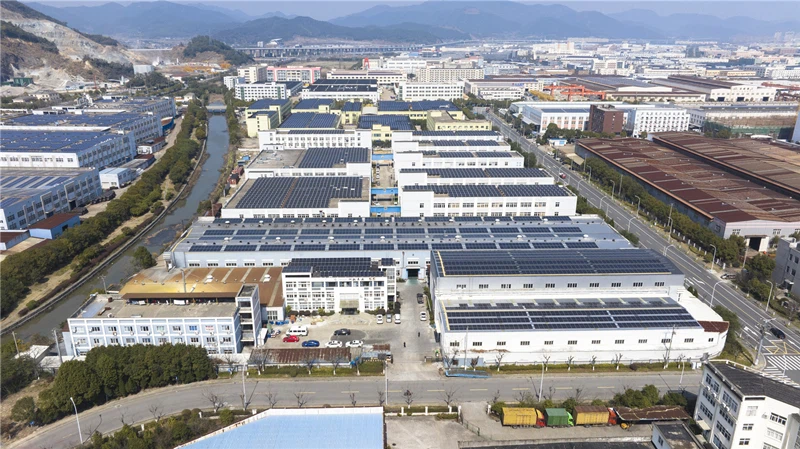
Ningbo Zhouchi Vehicle Industry Co., Ltd. was founded in 1992, located in Binhai Industrial Park of the beautiful coastal port city -Ningbo. Now our company covers the total area of 16000 square meters, with 150 staffs, including 20 quality inspectors and engineers. Our turnover is around12 Millions USD. Our company specializes in Aluminum Die-casting and Zinc Die-casting, CNC machining and assembling.
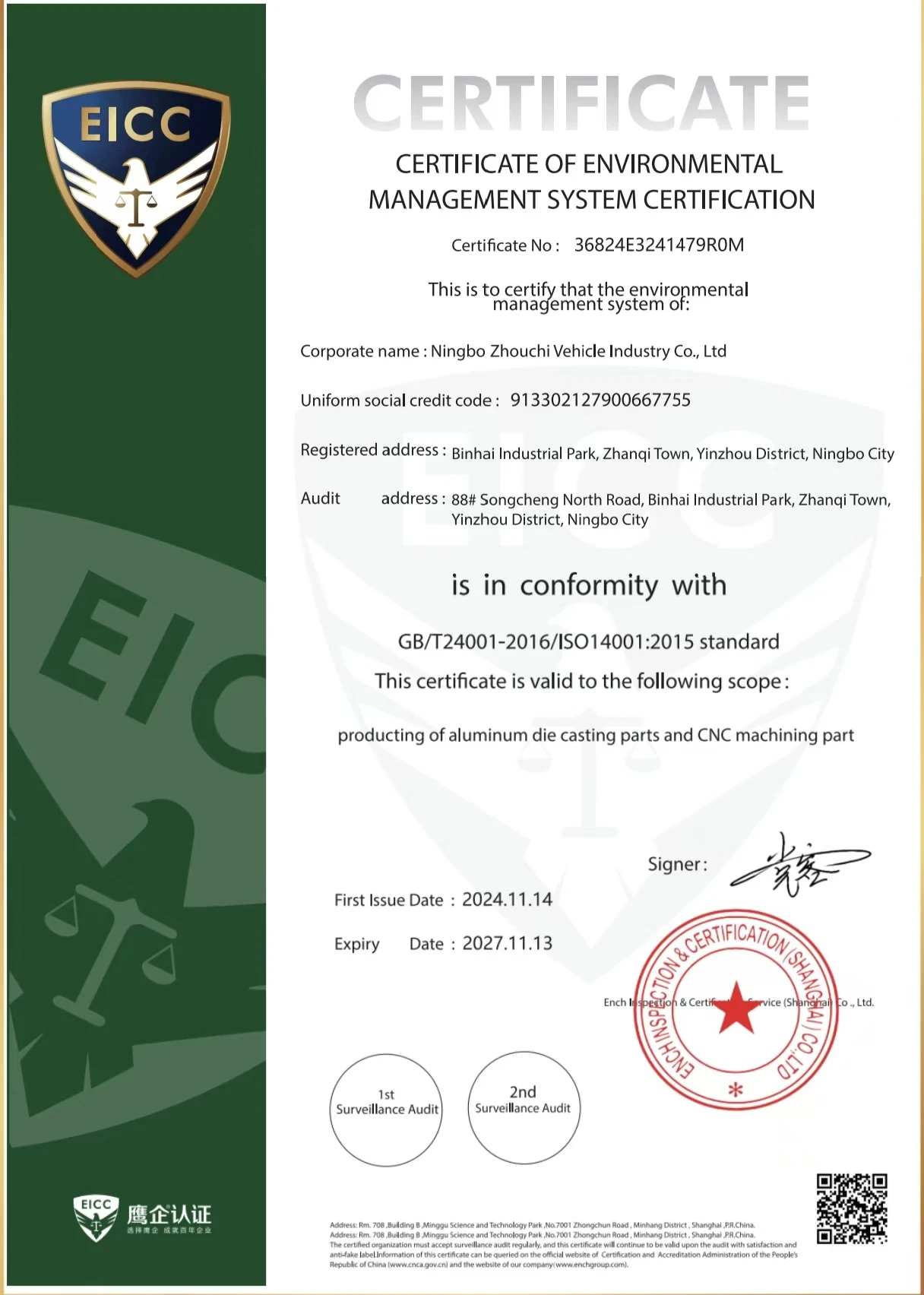
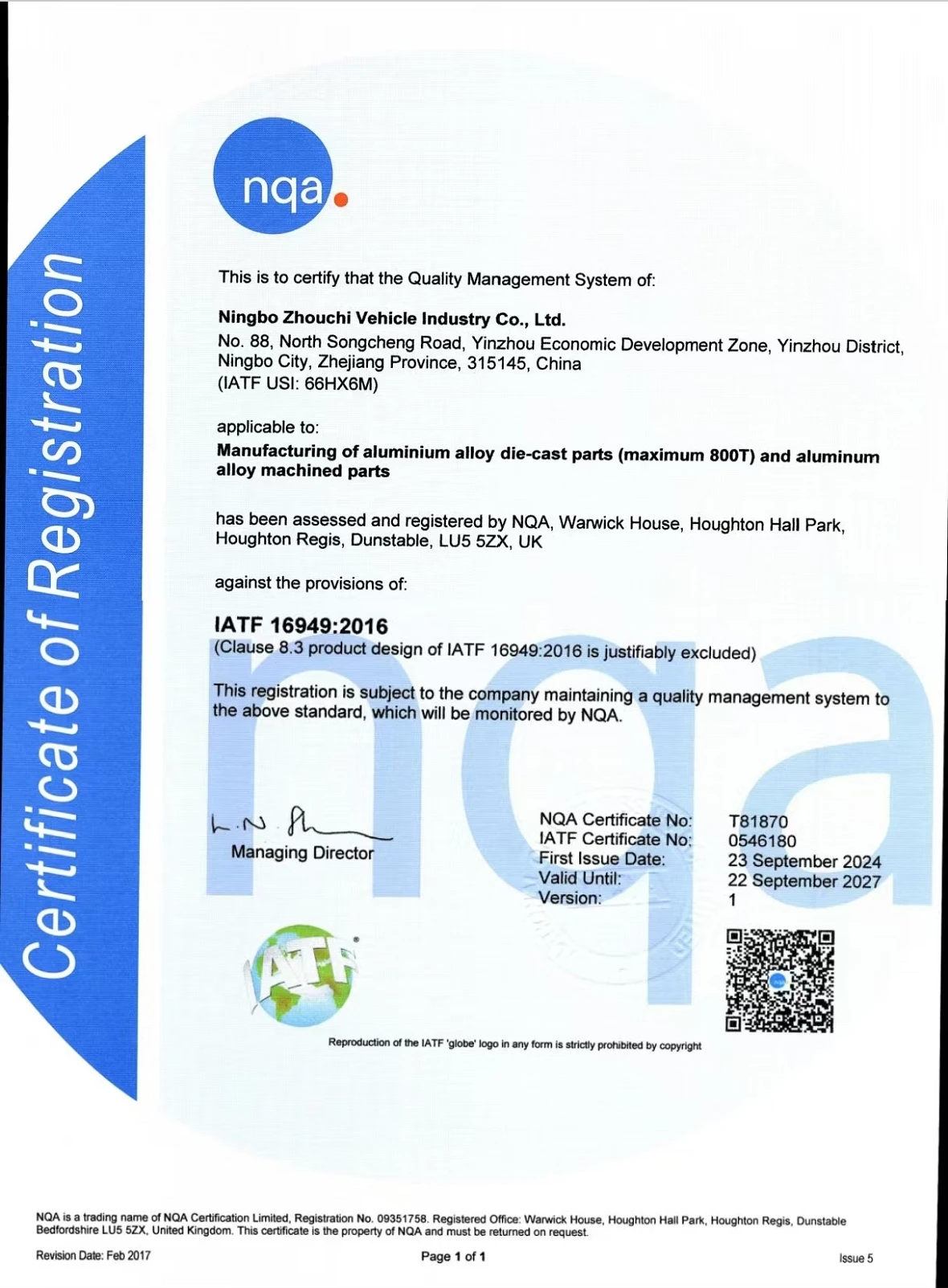
Certifications
FAQ
Q: What are the elements of a flange?
Q: What is the function of a flange?
Q: What are the basics of flanges?
Q: What is the structure of a flange?
Q: How do flange fittings work?
Q: What are the advantages of flanges?
Q: What is a flange used for?
Q: What is the difference between a blind flange and a flange?
Q: What is the manufacturing method for flange?
Q: What does a flange bolt look like?
Q: What is the difference between a flange and a slip on flange?
Q: How forged flanges are made?
Q: What is a forged flange?
Q: What is the process of casting a flange?
Q: What is the difference between a flange bolt and a normal bolt?
Hot Tags: cnc flange, China cnc flange manufacturers, suppliers, factory, Powder Coating Main Housing, Powder Coating Junction Box, Steering Linkage Components, Engine Crankcase Pressure Sensor, Starter Motor Cover, Casting Back Cover